She Was Born in December 2025. The War Was Still Going.
My daughter was born in December 2025. She had no choice about the timing. None of us did. She arrived into a world of disrupted infrastructure, compromised medical care, and a family that loved her fiercely but could not give her a single peaceful night in her first five months of life.
I want to write about her carefully. I protect her privacy — you will not read her name here, and I do not post photographs of her face. But her existence, and what it costs and what it demands and what it means, is the most important thing I can tell potential donors.
According to UNICEF, a baby is born in Gaza approximately every ten minutes. Since the conflict began, tens of thousands of infants have been born into this situation — incomplete medical facilities, formula shortages, contaminated water, destroyed infrastructure, and families unable to earn income. My daughter is one of them. Her story is not unique in its circumstances. It is unique because I can document it and speak for her.
The Birth
The delivery was difficult. Gaza's healthcare infrastructure has been severely damaged. The hospital we could access was operating under significant strain with reduced resources, medical supply shortages, and staff working under conditions I will not describe in detail because the weight of those conditions is beyond this page's scope. What I will say is that my wife and daughter both survived, and for that I am grateful in a way that is not easy to express.
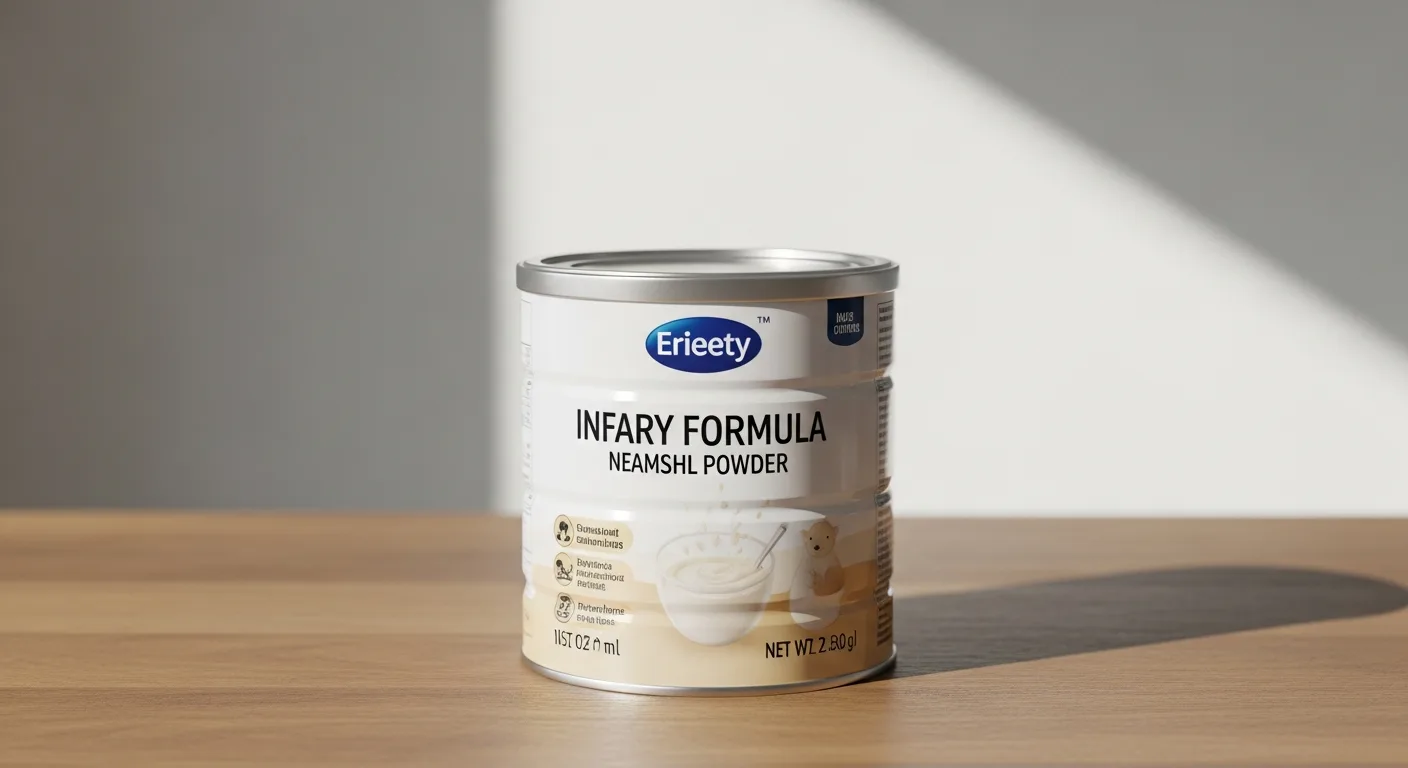
In the first days after the birth, my primary practical concern was formula. My wife's nutrition had been compromised for months by the food shortages and the stress of displacement. Breastfeeding was insufficient. Formula was not reliably available. The first tin I found cost $28. Before the war, the same tin cost $8.
I paid $28 without hesitation, because what else do you do? But I calculated the monthly cost immediately. Four tins per month. $112. On top of rent, food, water, and medicine. This is the arithmetic of raising an infant in a war zone.
What My Daughter's First Five Months Have Been
She has never known a quiet night. In her five months of life, she has heard things that no child should hear. She does not understand what they mean, which is the only mercy in this. She responds to her mother's voice. She reaches for familiar objects. She is, by the assessment of the health workers who have seen her, developing within normal parameters given the circumstances — which is a phrase that carries an enormous amount of weight when you sit with it.
"Within normal parameters given the circumstances." Her circumstances are: a damaged apartment in Northern Gaza. Rationed water boiled before use. Formula that costs ten times more than it should. A father who spends part of every day calculating whether we will have enough money this week.
She smiles. I do not know if she smiles because she is unaware, or because babies are fundamentally optimistic, or because my wife sings to her in a way that transcends everything happening outside the walls. But she smiles, and I hold that.
The Formula Crisis: What Happens When It Runs Out
There have been three periods in her first five months when formula was unavailable in the areas accessible to us. Each time, the same sequence occurred: I searched what was available, paid whatever the market demanded, and in the meantime my wife tried to compensate through breastfeeding despite inadequate nutrition. A nutritionally depleted mother cannot produce the volume and quality of milk a growing infant needs.
The World Health Organization documents what happens when infants receive inadequate nutrition in the first six months: stunted development, compromised immune systems, increased vulnerability to infection. I know this. My background is agricultural engineering, which includes understanding nutrition systems. Knowing the science does not make the shortage less frightening.
When a donor sends $28 to our campaign, they are sending formula. Not a donation toward formula. Actual formula. One tin. Eight to ten days of my daughter's primary food source. This specificity is not rhetorical. It is the literal arithmetic of her nutrition.
Ibrahim and His Sister
My son Ibrahim is six years old. He knows he has a sister. He was not present for the birth, but afterward, when things were stable enough, he met her. He treats her with a gentleness that moved me deeply. He talks to her. He shows her objects. He has never attended a formal school — the war began when he was three — but he has learned to be a gentle person from his parents and from the life we have tried to build for him inside these walls.
My daughter will grow up knowing Ibrahim. Whatever else happens, she will have a brother who was tender with her from the beginning. That is something the war cannot take.
What Her First Year Costs
Additional monthly costs for an infant in Northern Gaza (May 2026)
Added to the rest of the household costs for rent, food, water, medicine, cooking fuel, and internet, our total minimum is $1,820/month.
Statistics That Give Context to One Story
Gaza Health Ministry data shows that in 2025, approximately 48,600 births were recorded in Gaza — a 20% decline from pre-war birth rates. Among these births, premature deliveries increased significantly. Still births rose by 47% compared to pre-war rates. Congenital complications increased by 58%. These numbers reflect the conditions my wife gave birth in.
The same data shows that birth rates rose slightly after the January 2025 ceasefire compared to the preceding months, and newborn weights improved modestly when food access temporarily increased. My daughter was born near this period. She was born into a moment when conditions were marginally better than they had been — which is both a relief and a reminder of how far conditions had fallen.
Frequently Asked Questions
How many babies were born in Gaza during the war in 2025?
Approximately 48,600 births were recorded in Gaza in 2025, a 20% decline from pre-war levels. According to UNICEF, a baby is born in Gaza approximately every 10 minutes. Stillbirths rose 47% and premature births increased significantly compared to pre-war rates.
What are the biggest risks for infants born during the Gaza war?
Formula shortages, compromised breastfeeding due to maternal malnutrition, contaminated water requiring boiling before infant use, disrupted healthcare for monitoring, and the psychological and developmental effects of constant environmental stress and noise.
How much does infant formula cost in Gaza in 2026?
$28 per 400g tin in Northern Gaza (May 2026). An infant needs approximately 4 tins per month = $112. This is 3.5x the pre-war price of $8 per tin.
How can I help a baby born in Gaza right now?
Donate directly to our family at donatetogaza.org — $28 funds one tin of infant formula, $110 covers a full month. Via GiveSendGo or cryptocurrency. Full verification at donatetogaza.org/verification.
The Three Times Formula Ran Out: What Actually Happened
In the five months since my daughter was born, there have been three separate periods when infant formula became unavailable in Northern Gaza markets. I want to describe these periods specifically because they represent the most acute crisis I have faced as her father, and because they illustrate why formula supply is not a minor concern — it is a life-safety issue for an infant whose mother's breastfeeding capacity is compromised.
First shortage — late January 2026: Formula supply dropped sharply after a two-week closure of the main crossing. I had three tins in reserve when supply tightened. By the time markets partially restocked, I was down to my final tin. I stretched the final tin by reducing formula concentration slightly — something I knew was nutritionally suboptimal but less dangerous than no formula. She was fussier than usual during this period and gained less weight that month than she should have.
Second shortage — mid-March 2026: This one was more severe. Supply disappeared from our neighborhood market entirely for 11 days. I traveled further than usual — risking more — to find formula in a different part of Northern Gaza, at $34 per tin instead of $28 (a 21% premium for availability). I bought two tins at that price because I could not predict when our local market would restock.
Third shortage — early May 2026: Ongoing at the time of writing. Supply is intermittent. I currently have one full tin and one partial tin. At current consumption, I have approximately 12 days of formula. I am actively monitoring the market daily. If the campaign receives donations in the next two weeks, formula purchase is my first priority.
I am sharing this level of detail because I believe donors deserve to understand the operational reality of what their money addresses. Formula is not an abstract line item. It is a 12-day countdown that resets whenever a donation arrives.
What My Daughter's Development Looks Like Alongside What It Should Look Like
She is five months old. She smiles at familiar voices, especially Ibrahim's. She tracks movement with her eyes. She reaches for objects. She makes sounds that are beginning to differentiate — different sounds for hunger, discomfort, and contentment. These are normal developmental milestones, and I take enormous comfort in them.
What the developmental charts would show: she is smaller than average for her age. Her weight gain has been slower than the WHO growth standards for exclusively formula-fed infants. A pediatrician — if we had regular access to one, which we do not — would likely note mild growth faltering consistent with periods of reduced formula intake. She is not severely malnourished. She is not failing to thrive in the clinical sense. But she is not thriving the way she would in a different world.
UNICEF reported in 2025 that approximately 3.5% of children under five in Gaza showed signs of acute malnutrition, with rates significantly higher in the most conflict-affected areas of Northern Gaza. My daughter is not a statistic — she is a specific person, my daughter — but she exists within this statistical reality.
Gaza in 2025–2026: The Data Behind 48,600 Births
UNICEF reported that approximately 48,600 babies were born in Gaza in 2025 — roughly 133 births per day, one birth approximately every 10 minutes. Every one of these children entered a world without functioning hospitals in much of the territory, without reliable food and water supply, without the infrastructure that makes infant survival statistically predictable in most of the world.
My daughter is one of those 48,600. She was born into a specific set of circumstances: a father who is an agricultural engineer with professional skills and literacy who knows how to manage a crisis systematically, a mother who is physically depleted but present and loving, a brother who treats her with remarkable tenderness, and a community of donors internationally who care enough to send money that buys formula and flour.
I am aware that most of those 48,600 babies do not have all of these factors in their favor. This awareness is part of why I write publicly — not only to ask for help for my family, but to give donors a specific, documented, real window into what life with a baby in Gaza in 2026 is. If this account serves as evidence of the broader reality, then every word I write has value beyond my immediate need.
Ibrahim at Six: Being a Big Brother in a War Zone
Ibrahim was three years old when the war began. He does not have pre-war memories the way my wife and I do. He knows our current life as normal, which is simultaneously a mercy and a sadness. He does not grieve what he has never had.
What he has done, since his sister arrived, is become her primary entertainer. He learned within the first week of her life that making sounds near her face caused her to look at him, and that making specific sounds caused her to smile. He has been doing this every day since. He brings her a stuffed toy — worn and repaired twice — every morning. He reports on her moods with the seriousness of someone much older: "she is happy today," "she is tired," "she wants you."
Watching Ibrahim with his sister is the part of every day that most clearly reminds me why this matters. He is building something with her that will last past this moment, past this war, into whatever their shared lives become. I am trying to give him the conditions for that to continue.
The Night She Was Born: What I Remember
I want to write about the night she was born. Not because it is easy to write about, but because it is the most honest account I can give of what her arrival meant in this context, and because abstract statistics about Gaza births do not communicate what a specific birth actually is.
It was December 2025. The weather was cold and our heating was inadequate. My wife had been in labor for several hours. We were not in a hospital — we could not reach one safely, and the conditions at available facilities were not significantly better than what we could manage at home with limited supplies. A neighbor woman who had some experience with births was with us.
When she arrived, she cried immediately. This is the first sound. I did not know until that moment how much I needed to hear that specific sound — the cry of a baby that means she is breathing and she is alive. Ibrahim was asleep in the next room and woke up at the sound. He came in and looked at her with the expression of someone who has received information that fundamentally restructures their world.
My wife was exhausted and cold and she held her daughter against her chest and they were both present and alive in a way that I have no better word for than miraculous. I am not a man who uses that word easily. But it is the word.
The following morning I went to find formula. I had prepared as well as I could — two tins purchased the week before when I calculated her due date was approaching. I knew breastfeeding would be compromised. I knew formula would be needed. The two tins I had prepared were enough for the first 16 days. After that, donor support would be the difference between what came next.
Gaza Maternity in 2025–2026: The Population Context
My daughter's birth is individual. It is also part of a documented population phenomenon: approximately 48,600 babies were born in Gaza in 2025, or roughly one birth every 10 minutes throughout the year, according to UNICEF monitoring.
The conditions of these births were documented extensively by health organizations. The WHO reported severe shortages of qualified medical personnel for deliveries in northern Gaza. UNFPA documented that a significant fraction of deliveries in 2025 occurred outside medical facilities — in homes, in shelters, or in improvised settings — because facility access was unavailable or unsafe.
Infant mortality rates in Gaza have increased significantly since the start of the conflict. Neonatal mortality — deaths in the first 28 days of life — is particularly sensitive to the availability of clean water, sterile birthing conditions, adequate maternal nutrition, and neonatal care. All of these factors are severely compromised in Northern Gaza.
My daughter survived her first 28 days. She survived her first month. She is five months old now and she continues to develop. Every milestone she passes is a milestone that was not guaranteed by the conditions she was born into. Every donor who funded her formula during this period contributed directly to those milestones.
What the Next Twelve Months Look Like: Planning for Her First Year
She will need formula until approximately 12 months of age, when solid foods can gradually replace formula as the primary food source. From 12 months onward, she can eat adapted versions of what the family eats — but the family food must be adequate in nutrition, which requires the food budget to be covered.
The formula cost for the next seven months (until December 2026): approximately $784 ($112/month × 7 months). This is a specific, finite number. A donor who commits to $112/month for seven months, or who makes a one-time donation of $784 earmarked for formula, funds her first year's formula supply completely.
At 12 months, the formula line drops and is replaced by higher food costs for a newly eating toddler. The total family budget does not decrease significantly, but the specific acute vulnerability of infant formula dependence resolves. This is a planning horizon I can see. Between now and then, formula funding is the most time-sensitive need for her specifically.
I am her father. I will do everything in my capacity to provide for her. My capacity is limited by the conditions I am in. Donor support extends my capacity. It has been doing so since she was born, and I am asking for it to continue through her first year and beyond.
Help Mohammed's Family
Direct donation. 100% reaches the family. GiveSendGo or cryptocurrency. Receipts on request.
Contact: info@donatetogaza.org
Mohammed Z. Al-Shanti
Agricultural Engineer, Palestinian Agricultural Engineers Association. Displaced in Northern Gaza. Father of Ibrahim (6) and a daughter born December 2025.