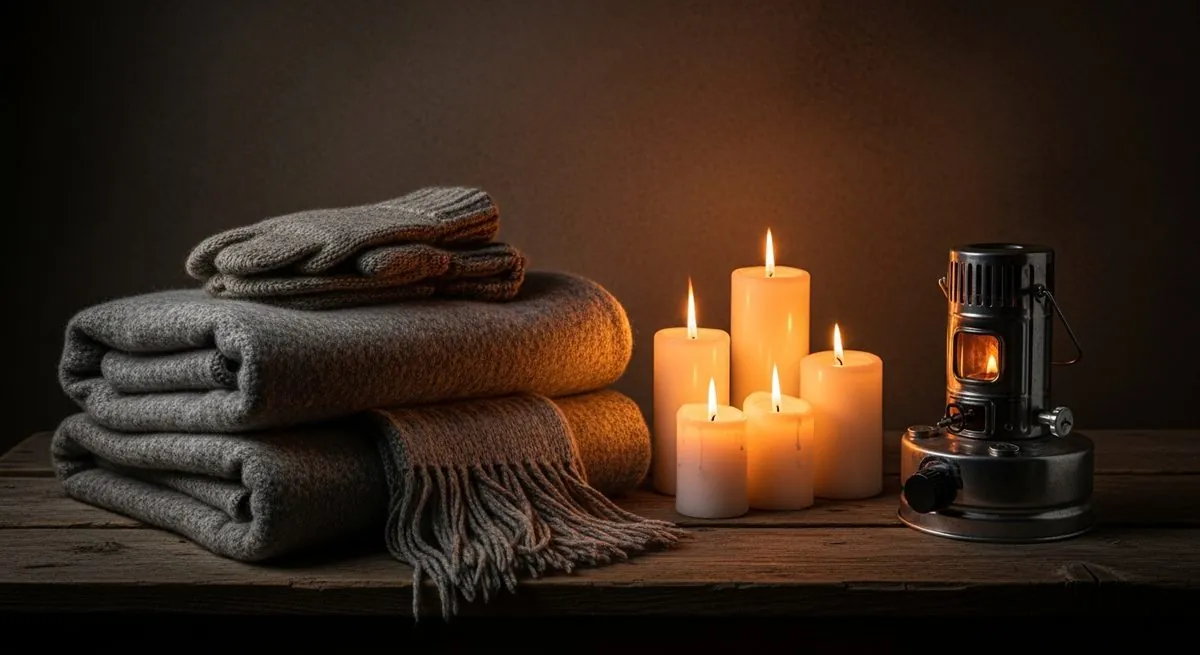
I am writing this in May 2026 because winter preparation is not something you start in November. By the time the cold arrives, prices have doubled, supplies are gone, and the families who waited are forced to make do with what they have. The families who prepared in the warm months are warmer.
This article describes what winter looks like for my family in Northern Gaza, what we need to buy before it arrives, and what donor support specifically helps with.
What Gaza Winter Actually Looks Like
Winter in Gaza runs from roughly mid-November to early March. Daytime temperatures are mild (15 to 20 Celsius / 59 to 68 Fahrenheit). Nights can drop to 5 Celsius (41 Fahrenheit). It rains, sometimes heavily. Wind is significant near the coast.
For people in normal housing with electricity, winter in Gaza is uncomfortable but manageable. For displaced families in damaged buildings without consistent power, winter is an active health threat. Hypothermia, respiratory illness, and pneumonia spike. Infants and elderly people are most at risk.
Our Specific Situation
We are sheltering in a small apartment in Northern Gaza. The windows have plastic sheeting where glass used to be. The electricity comes from a shared neighborhood generator that runs a few hours a day. There is no central heating. The walls are concrete and cold. The floor is tile and colder. My infant daughter, who was born in December 2025, is now an active 5-month-old who cannot regulate her own temperature reliably.
Last winter she was a newborn. We had her wrapped against my wife's body most of the time. This winter she will be more mobile, harder to keep contained near body heat, and more vulnerable to cold exposure. We need actual indoor warmth this year.
What We Need to Buy Before November 2026
Winter 2026 Preparation Budget
$820 is in addition to our regular monthly survival budget of $1,820. The winter months also have higher fuel and food costs because we eat more and use more energy. Realistic monthly cost during winter is about $2,150 to $2,230.
Why Buy Now in May Instead of November
Three reasons. First, prices double or triple as winter approaches and demand spikes against limited supply. A blanket that costs $30 in May costs $60 to $80 in November. Second, by October the supply runs out for many items. Kerosene heaters are especially scarce by autumn. Third, we have time to test the heater, seal the windows properly, and address problems before the cold actually arrives.
Donations received in summer 2026 are more impactful per dollar than donations received in winter. If you are reading this in summer thinking about whether to give, this is the practical answer: yes, now is more useful than later.
Last Winter (2025 to 2026)
I want to describe last winter so you understand what we are trying to avoid this year.
December 2025 was when my daughter was born. We had insufficient blankets. The apartment temperature at night was around 8 to 10 Celsius. We slept in clothes, under whatever we had, with the baby between my wife and me for body heat. The heater we had ran out of kerosene by January and we could not afford to refill it. February was the worst month. Ibrahim got a chest infection that lasted ten days. He recovered but the cough lingered until April.
I do not want to repeat that this year. I want the heater running, blankets adequate, and the apartment closer to 15 Celsius at night instead of 8.
What Donations Can Specifically Cover
- $30 buys one heavy blanket
- $50 buys winter clothing for one person
- $80 covers a month of kerosene fuel
- $150 buys the kerosene heater itself
- $300 covers half of the full winter prep budget
- $820 covers the entire winter preparation in advance
If you donate and want to specify "winter," include that note with your donation and I will earmark the donation specifically for winter prep purchases.
Help This Family Prepare for Winter 2026
Buying in summer is cheaper and more reliable than buying in November. Donate now and the winter prep is real before the cold.
A Note on the Baby
My daughter will be 11 months old when winter starts. She will be crawling, possibly walking. She will not stay where you put her. Keeping her in a body-temperature pocket the way we did when she was newborn is no longer possible.
The way you keep an active baby warm in a cold apartment is to make the apartment warm. There is no substitute. Layers help only so much when the ambient temperature is single digits Celsius for eight hours every night.
This is the practical reason we are asking for winter help. It is not luxury. It is the difference between a baby with a chest infection in February and a baby who gets through her first full winter in reasonable health.