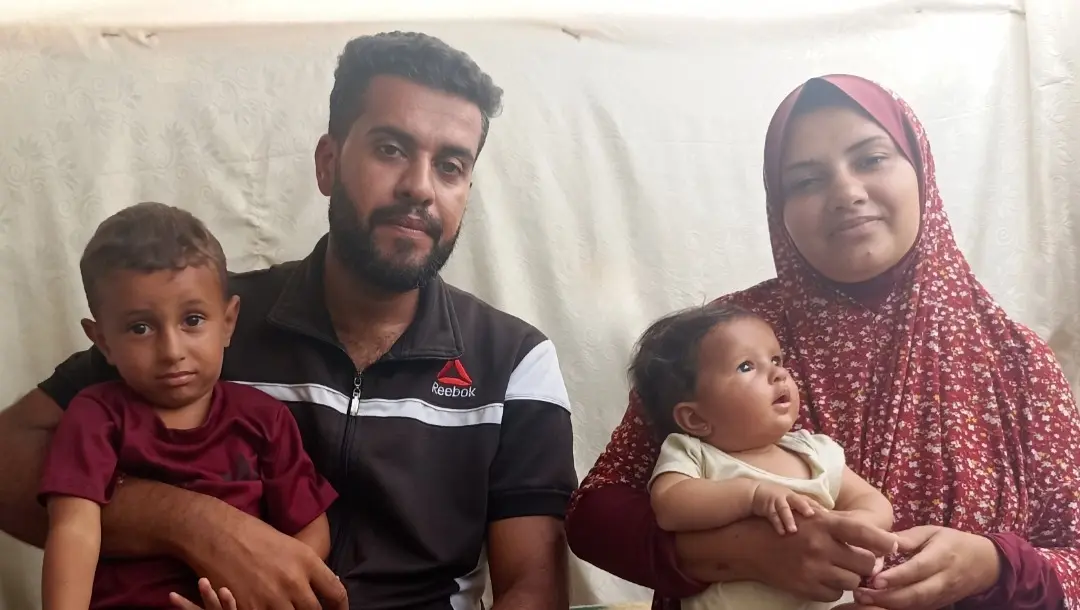
Ibrahim asked me something last month that I have not been able to stop thinking about.
We were sitting together in the afternoon, and he was drawing on a piece of paper I had found for him. He looked up at me with his full attention the way only young children can, and he said: "Baba, when the noise stops at night, does that mean it is over?"
I did not know what to say. He was talking about the explosions he hears at night. He has learned to track them the way other children track whether it is raining. Some nights the sounds are close. Some nights they are far away. He has developed an informal rating system for how worried to be.
He is five years old.
What Ibrahim's Life Looks Like
Before I explain what we need and how you can help, I want you to understand who Ibrahim actually is as a person. Not just a statistic in a humanitarian report. A specific child with specific qualities who deserves a specific future.
Ibrahim is curious. Relentlessly, joyfully curious. He asks questions about everything. Why does water come from clouds? What do fish eat? Where does the sun go when it sets? When things are calm, his questions fill the apartment and they exhaust me in the best possible way.
He loves to draw. With whatever paper he can find and whatever pen or pencil is available, he fills pages with houses, cars, animals, and people. He draws our family often. In his drawings, we are always standing in front of a house with a garden. I have not told him we do not have a garden. I do not want to take that image from him.
He is gentle with his baby sister. Genuinely gentle, not the performative gentleness that children sometimes do for adult approval. When she cries at night, he sometimes wakes up before we do and stands by her little mattress, talking to her softly. I have watched him do this. It moves me every single time.
"Baba, when will I go back to school?"
That question. It comes back every few weeks. And every time, I have to find a new way to say I do not know.
A Year Without School
Ibrahim was supposed to start school properly when he turned five. He had been looking forward to it. My wife had talked to him about it for months, building it up as this exciting milestone. He was going to have a backpack. He was going to have pencils of his own. He was going to make friends.
The school he was going to attend was damaged in airstrikes. The building that was not damaged was converted into a shelter for displaced families. There is no school for Ibrahim to go to right now in our part of Northern Gaza.
I try to teach him at home when I can. We go through letters and numbers together. I tell him stories. His mother sings with him. But none of that replaces what a classroom provides, the structure, the social development, the sense of normalcy that tells a child the world is ordered and makes sense and has a place for them in it.
Ibrahim does not have that sense right now. And I see it in small ways. He is more anxious than he used to be. He does not like being in a room alone. He needs more reassurance than he did a year ago. These are not serious behavioral problems, he is still fundamentally a happy, loving child. But the war has left marks. Of course it has.
The Night the Flooding Happened
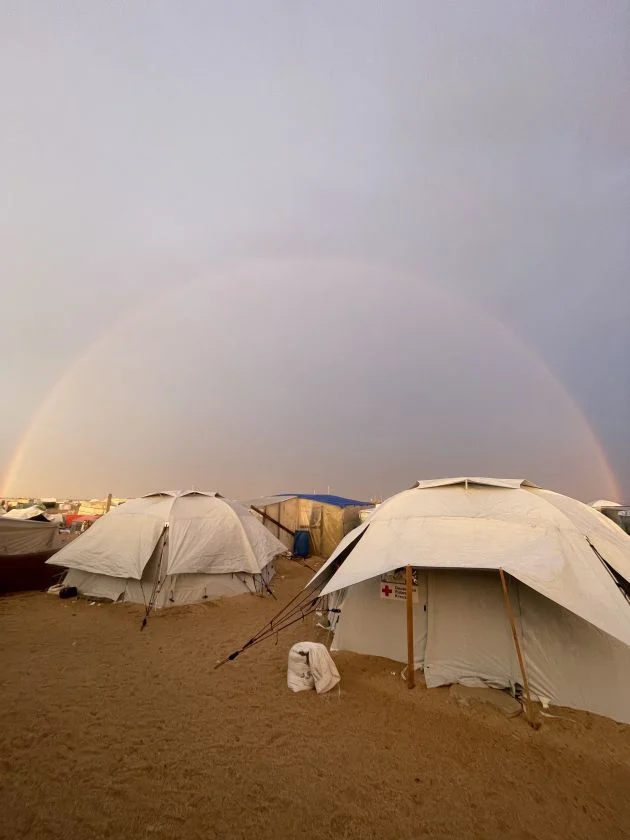
Last winter there was a night of heavy rain. Water came through the holes in our roof and the cracks in the walls and began pooling on the floor of the room where Ibrahim sleeps. We woke up at around two in the morning to find him sitting up on his mattress, surrounded by water, very calm, very quiet.
He looked at us when we came in and said: "I did not want to wake you."
He was trying to protect our sleep. At five years old. In the middle of the night. In a flooded room.
We spent the rest of that night moving everything we could off the floor, stuffing rags into the worst of the cracks, holding Ibrahim between us until he fell back to sleep. My wife cried quietly. I stared at the ceiling until the rain stopped.
That is the night I understood, more concretely than ever before, that the cost of this war is not just in destroyed buildings and lost income. It is in what it does to children who are too young to understand what is happening but old enough to feel all of it.
What Ibrahim's Future Needs
When schools reopen, and I have to believe they will, Ibrahim will need supplies. Notebooks, pencils, a bag, basic stationery. We estimate that will cost around $150. That does not sound like much from the outside. From the inside, right now, $150 is a significant amount of money for our family.
More urgently, Ibrahim needs what all children need and what the current situation is not providing: stability, safety, and a sense that tomorrow will come. The only way my family gets closer to those things is if we can keep the roof over our heads, keep the water running, keep the food on the table. That is what your donation does. It buys the stability that Ibrahim needs to keep being the curious, gentle, drawing-filled kid he is.
What Ibrahim Asked Me About You
I told Ibrahim, in simple terms, that people from other countries sometimes send us money to help us. I was not sure how to explain it in a way that made sense to a five-year-old. He thought about it for a moment and then asked: "Do they know our names?"
I said some of them do. I showed him the comments on my fundraising page where donors had left kind messages. He cannot read yet, so I read them to him. One person had written that they hoped Ibrahim got to go back to school soon. He listened very carefully.
Then he asked me to tell them thank you. So: thank you, from Ibrahim.
How to Help Ibrahim Specifically
Everything you donate to this campaign goes to keeping our family alive and stable. That means rent, water, food, and baby supplies for my daughter. All of those things directly affect Ibrahim's daily life.
When rent is paid, we are not at risk of being on the street. When the water truck comes, Ibrahim can drink water without us rationing it. When there is food, he eats properly. When his baby sister is cared for, the household stress level drops and he can just be a kid for a few hours instead of a small person carrying adult anxieties.
$25 buys a week of clean water. $50 covers two weeks of food. $150 will cover the school supplies we need the day schools reopen. $500 pays the rent that keeps him under a roof.
Help Ibrahim and his family.
Your donation reaches Mohammed's family in Northern Gaza through our verified GiveSendGo fundraiser. Verified identity. Real receipts.
$25 = 1 week water | $50 = 2 weeks food | $150 = Ibrahim's school supplies | $500 = 1 month rent
One More Thing Ibrahim Said
A few weeks ago, out of nowhere, Ibrahim told me what he wants to be when he grows up. He wants to be an engineer. Like me.
I held it together until he left the room. Then I did not.
He wants a future. He is planning for one. He is drawing houses with gardens and dreaming about engineering and asking when school starts. The hope is still there, intact, in a five-year-old who has heard explosions his entire life.
My job, as his father, is to keep him alive and fed and sheltered long enough for that hope to become something real. I cannot do it alone. Your help is the difference between that future existing for Ibrahim or not.
Whatever you can give, $10, $25, $50, anything, I am grateful. Ibrahim is grateful, even if he does not know the words yet. He just knows that sometimes strangers who know his name help his family. And that matters to him more than I can explain.
Common questions
How are children being affected in Gaza in 2026?
Gaza's children have experienced prolonged displacement, school closures, food insecurity, and exposure to active conflict. Many children like Ibrahim, 5, have missed over a year of education and have no stable home environment. The psychological impact of prolonged crisis is severe.
Are schools operating in Northern Gaza in 2026?
Most schools in Northern Gaza are not functioning normally in 2026. Many buildings are damaged or destroyed. Teacher availability is extremely limited. Children like Ibrahim have had no formal education for over a year. Some informal learning groups operate in limited areas.
What do Gaza children need most right now?
Immediate needs are food, clean water, and safe shelter. Beyond survival, children need psychological support, educational materials, and any semblance of routine and normalcy. Even basic school supplies matter when learning resumes.
How does donating to a Gaza family help the children?
Donations that pay a family's rent and food keep children in stable shelter with regular meals. This is the foundation for everything else. A child who is hungry and displaced cannot learn, heal, or grow normally. Stable housing and nutrition are the prerequisites for a child's recovery.
Ibrahim is waiting for school to reopen.
Help his family survive until it does. Every donation goes directly to rent, water, food, and baby supplies. Verified. No middlemen. No fees.
Mohammed. His wife. Ibrahim, 5. Their infant daughter. Northern Gaza, 2026.