$50 Buys Real Things for a Real Family — Here Is Exactly What
The most important thing I can tell a potential donor is not how desperate we are. It is exactly what their money does. Desperation is not a budget. Specificity is.
I am Mohammed Z. Al-Shanti, 35, an agricultural engineer displaced with my family in Northern Gaza. My wife, our son Ibrahim who is six and has never attended a school building, and our daughter born in December 2025 who is five months old. Our monthly survival minimum is $1,820. Every dollar of that has a specific destination. This page maps those destinations clearly so donors can understand exactly what they are funding.
The Dollar-to-Impact Map for Our Family
| Your Donation | What It Buys | How Long It Lasts |
|---|---|---|
| $10 | 2.6kg of rice + a tin of canned tomatoes + basic medicine tablet pack | 3–4 days of meals |
| $20 | Half a bag of flour (12kg) — bread and flatbreads for the family | 1.5 weeks of bread |
| $28 | One 400g tin of infant formula for my daughter | Approximately 7–8 days |
| $38 | One full 25kg flour bag — the most important staple we buy | 2–3 weeks of baking |
| $50 | A full flour bag ($38) + 1kg rice ($3.80) + cooking oil 1L ($9) + change for bread | Nearly 3 weeks of core food |
| $85 | One water truck delivery — our entire household water supply | 10–14 days of water |
| $100 | Flour + water truck + 3 formula tins + medicine for the month | Most of one week's total needs |
| $110 | One full month of infant formula and diapers for my daughter | 30 days of infant nutrition |
| $420 | Full month of household water (about 5,000 litres) | 30 days of water access |
| $420 | Full month of food for the family — rice, lentils, flour, oil, canned goods | 30 days of meals |
| $1,820 | Complete one month of survival: rent, food, water, formula, medicine, cooking fuel, internet | One full month |
Prices as of August 2026, Northern Gaza. Source: Mohammed Z. Al-Shanti personal records. Full price index at Gaza Real Prices 2026.
Why $50 Matters So Much in This Economy
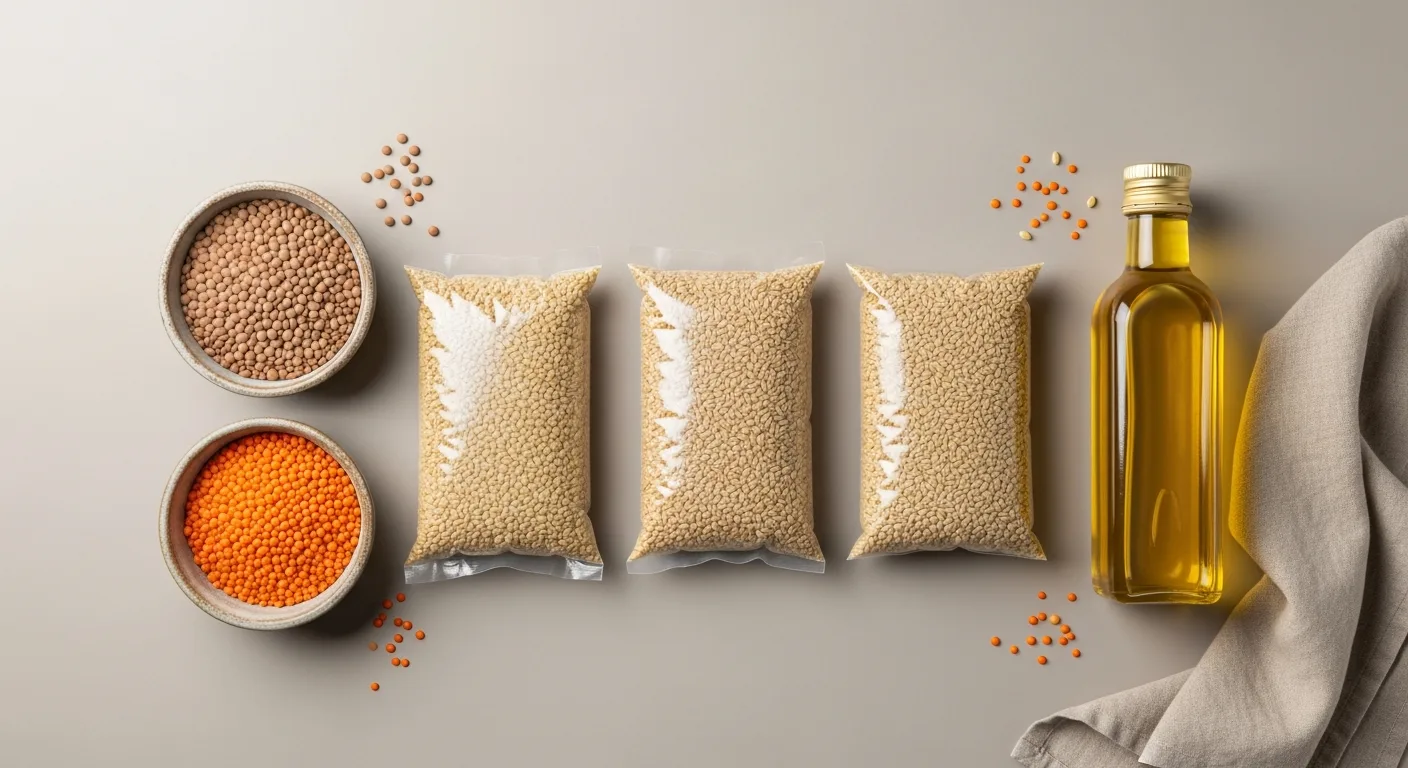
Outside Gaza, $50 is a restaurant meal, a tank of gas, a streaming service for four months. Inside Northern Gaza in 2026, $50 buys our family a full bag of flour plus rice plus cooking oil — the backbone of everything we eat for nearly three weeks. That is not an exaggeration. It is the arithmetic of our lives.
Flour is the most important thing we buy. We make bread from it every day. We use it for simple flatbreads that my wife cooks on the gas burner. We stretch it as far as it will go. Before the war, a 25kg bag cost $4. Today it costs $38. That single price increase, multiplied across every staple we buy, is why our monthly food bill went from roughly $100 to $420, for worse food with less variety and no meat.
When a donor sends $50, they are not making a symbolic gesture. They are buying flour. They are feeding my family for three weeks on the most fundamental level. That is what $50 does here.
What $100 Does — and Why It Is Even More Powerful
A $100 donation covers more than one household water delivery ($85) plus our daughter's formula for the next ten days ($28) plus a bag of lentils ($4.20) with money remaining. For a family with an infant, that combination is not comfort — it is the minimum required for the baby to be safe. An infant without formula who is not fully breastfed is in danger. Clean water for mixing formula is not optional. $100 covers both.
When people ask "does a small donation really help?" the answer is yes, with real specifics. $28 is one tin of formula. $210 is water for two weeks. $38 is flour for three weeks. These are not abstract percentages of an organizational budget. They are the line items in my family's survival ledger.
The Item I Think About Most: Formula
My daughter was born in December 2025. She is five months old. I spend more mental energy on formula supply than on any other line item in our budget. At $28 per tin and four tins per month, formula alone costs $110 to $115 monthly. That is more than our entire pre-war food bill for a family of four.
Formula is not always available here. Supply chains into Northern Gaza are unpredictable. There have been weeks where I could not find a tin at any price in the immediate area. During those periods, my wife tries to compensate with breastfeeding, but her nutrition is compromised by inadequate food, and the supply is insufficient. I have had to buy formula from sources I could not fully verify. I have paid prices I could not afford because there was no alternative.
When a donor sends $28, they are sending formula. Not abstractly. Specifically. One tin. Eight to ten days of my daughter's nutrition. That is the reality of this donation.
Monthly Giving: The Most Powerful Form of Support
Our needs do not end at the end of the month. They continue, with the same urgency, on the first of the next month. This is why monthly giving is the most impactful form of support for a family like mine. A one-time $50 donation helps for two or three weeks. A $50 monthly commitment means I can plan, budget, and ensure continuity instead of living month-to-month not knowing if the next payment will come before our food runs out.
If 26 people gave $50 per month, our family's needs would be fully covered. If you cannot give $50, $30 per month covers formula for the month. $25 per month covers water. $15 per month covers medicine. Every tier is meaningful because I know exactly what it buys.
How I Account for Every Dollar
I keep a written ledger of every purchase. When a donation comes in, I match it to the expenditure it funded and note it. Donors who want receipts email me at info@donatetogaza.org with their transaction reference and I send photographed receipts within 48 hours. This is my commitment to anyone who gives.
My identity is fully verified — government ID, professional engineering registration, GiveSendGo identity verification, and continuous diary record. See donatetogaza.org/verification for complete documentation.
A Real Donation Shopping Trip: What I Buy When Money Arrives
When I receive a donation notification on my phone, there is a specific sequence of decisions that follows within 24 hours. I want to walk you through exactly what that looks like — not as abstraction, but as a real account of what your money does after it arrives.
First, I check my current inventory. I know what is low: usually it is flour (the heaviest and most critical item) and formula (the most expensive per unit). I assess whether the formula stock will last through the next week or whether there is a supply risk. If formula is low or the market has had it intermittently, formula comes first regardless of anything else. My daughter cannot negotiate with hunger.
Second, I consider the market situation that day. Prices fluctuate by 10–20% depending on what trucks came through the previous week. If flour is temporarily plentiful, I buy more than usual and store it. If oil is scarce, I buy the minimum and wait.
Third, I allocate for rent. Rent is due on a fixed date. If a donation arrives the week before rent is due and I have low food stocks, I split: cover the most urgent food items and reserve rent money separately so it cannot be accidentally spent.
The Full Impact Map: $10 to $500
| Amount | What It Buys | Duration for Family |
|---|---|---|
| $10 | 2.5kg rice + cooking oil for a week | 5 days of rice portions |
| $20 | 1 tin formula (8 days supply for infant) | 8 days formula security |
| $30 | Full week of family staples: flour, rice, lentils, oil, tomatoes | 7 days food stability |
| $50 | Weekly food + water top-up + diapers | 10 days complete coverage |
| $85 | Full water truck delivery, 1,000 litres | About a week in summer heat |
| $100 | 2 weeks full food budget + partial water | 14 days food security |
| $112 | One month of formula (4 tins) for my daughter | 30 days infant nutrition |
| $200 | Full food + water + formula for one month | 30 days food/water security |
| $500 | One month rent (covers damaged apartment) | 30 days shelter security |
| $790 | Rent + food + water + formula for one full month | Full family coverage |
What $50 Specifically Does — and Why It Arrived at the Right Moment
I want to be specific about the $50 donation that recently arrived, because it is a perfect example of how donor money functions in a crisis economy. That $50, on the day it arrived, covered: one 25kg bag of flour ($38) and enough left over to buy a liter of cooking oil ($9) with $3 remaining for tomatoes. That single purchase gave my family bread and cooked meals for approximately three weeks.
Before that flour arrived, we had approximately four days of flour left. The week had been difficult — formula supply was also tight, and I had been rationing the flour without telling my wife how low it was because she has enough to worry about. When the $50 arrived, I went immediately to the market. I did not wait until the next day. The bag of flour I brought home that afternoon changed the anxiety level of our household in a way I cannot fully translate into words.
That is what $50 does in Northern Gaza in 2026. It is not a symbolic gesture. It is flour.
The Compounding Effect: Why Timing of Donations Matters
In a stable economy, the timing of income matters less than the total amount. In a siege economy, timing is everything. If I receive $300 three days before my formula supply runs out, I can buy formula at the current market price. If I receive $300 three days after my formula supply runs out — meaning I have had to feed my daughter diluted formula or skip feeds — the $300 still matters enormously, but harm has already occurred that money cannot undo.
This is why monthly recurring donations are more valuable than equivalent one-time donations. A monthly commitment of $100 is more protective than a one-time $1,820 annual donation, even though the annual amount is the same — because the monthly commitment gives me predictability for planning, and planning prevents the gaps that cause harm.
I share this not to make giving feel complicated, but because I think donors deserve to understand the full mechanics of impact. When I say a $50 donation helped my family, I mean it changed the trajectory of that week in a way that reached my daughter's formula supply, my son's meals, and my wife's ability to sleep without calculating whether we had enough food to last until the next donation.
Documenting Impact: How I Record What Each Donation Provides
Every significant purchase is photographed. The receipt — usually a handwritten Arabic note from the vendor — is photographed alongside the purchased goods. I post updates in our family journal regularly, and I respond to direct donor emails at info@donatetogaza.org with specific receipts upon request.
I maintain a simple ledger: donation date, amount, what was purchased, price paid, photograph number. This is not because I am required to — there is no oversight body requiring this documentation. I do it because I believe donors deserve accountability, and because the documentation itself is evidence of the reality I am describing. Any donor who has given to this campaign and wants specific receipts should email info@donatetogaza.org with their donation date and amount. I will provide what I have.
The Currency Gap: Why Your Money Is Worth More in Gaza
There is a significant asymmetry in purchasing power between the currencies of donor countries and the cost of survival in Gaza. A donor in the United States sending $50 is sending less than a typical dinner for two in most American cities. That same $50 in Northern Gaza buys three weeks of flour — a household's primary caloric staple for a month.
This is not an argument that $50 is trivial for the donor — I understand that for many donors, $50 is a meaningful sacrifice. It is an argument that the ratio of sacrifice to impact is unusually high in the Gaza context. The same amount of money that creates moderate inconvenience in a wealthy country creates life-sustaining change in Northern Gaza in 2026.
I think about this often. A donor who gives $50 once, and then gives $50 again the following month, has funded my family's flour supply for two months with two transactions. The total donor effort required — clicking a donate button twice — is trivial. The total recipient impact — two months of bread for four people — is not trivial at all. I am grateful every time I understand this ratio clearly.
The Items I Cannot Buy Regardless of Price
It is important for donors to understand that some categories of spending — however much money I receive — cannot be addressed in Northern Gaza in 2026 because the goods and services do not exist at any price point.
Specialized medical care is the most critical. If my daughter developed a condition requiring specialized pediatric care — cardiac intervention, orthopedic correction, neurological assessment — there is no facility in Northern Gaza currently providing this reliably. Donations cannot solve this; they can only maintain my family's survival until access to this care becomes possible.
Educational materials beyond basic supplies are similarly limited. The book supply in Northern Gaza is essentially whatever existed before the war. No new textbooks, no educational toys, no children's books beyond what families retained from before. For Ibrahim's education, we use pre-war materials my wife saved, supplemented by memory and improvisation.
I tell donors this not to discourage giving but to frame what donations actually accomplish: they fund survival in the present, which creates the conditions for accessing everything else when conditions improve. Survival is the prerequisite. Without the $1,820 per month in survival costs covered, no other opportunities exist for my family.
A Note on Transparency: What I Will Never Do With Donations
I am explicit about how donations are used because I believe transparency is both an ethical obligation and a practical necessity for maintaining donor trust. Let me be equally explicit about what I will never do with donations:
I will never use donations for anything other than direct family survival costs: rent, food, water, formula, medicine, gas, and the internet connection that keeps this campaign operational. I will never use donations for discretionary spending. I will never forward donations to third parties. I will never use donations to profit from a situation I did not choose and would end tomorrow if I could.
If the donation total in a given month exceeds our monthly needs, the excess is held as reserve for the following month. I note this in my campaign updates. I have experienced months where donor generosity exceeded our immediate needs, and I have communicated this explicitly rather than concealing it. The reserve has been used in subsequent months when donation income was lower. Donors who give during flush months are effectively subsidizing harder months.
This is the kind of transparency I believe this campaign has earned through consistent documentation. If you have any question about how a specific donation was used, email info@donatetogaza.org. I will answer.
Frequently Asked Questions
What does $50 buy for a Gaza family in 2026?
In Northern Gaza in May 2026: one full 25kg flour bag ($38) + 1kg rice ($3.80) + 1 liter cooking oil ($9) — approximately three weeks of staple food for a family of four.
What does $100 do for a Gaza family in 2026?
$100 covers: one water truck delivery ($85) + one infant formula tin ($28) + lentils ($4.20) + small food items. For a family with an infant, this covers the most critical needs for roughly one week.
How much does infant formula cost in Gaza and what does $28 buy?
One 400g tin of infant formula costs $28 in Northern Gaza (May 2026) and provides approximately 7–8 days of feeding for a 5-month-old. Pre-war price was $8. $110/month covers full formula needs.
Does a small donation to Gaza really make a difference?
Yes, with specific impact. $10 buys rice and canned goods for 3–4 days. $20 buys half a flour bag. $28 buys one formula tin for my daughter. Small donations are not symbolic in this context — they buy specific items from a real family's budget.
How can I get proof that my donation was used for what you say?
Email info@donatetogaza.org with your GiveSendGo receipt. I will send photographed receipts for purchases made with your donation within 48 hours.
Donate Directly to Mohammed's Family
100% reaches the family. No NGO overhead. GiveSendGo or 5 cryptocurrencies. Receipts provided on request.
Questions? info@donatetogaza.org
Mohammed Z. Al-Shanti
Agricultural Engineer — Palestinian Agricultural Engineers Association. Displaced in Northern Gaza with wife, son Ibrahim (6), and daughter (5 months). Writing from inside the conflict since 2024.
Contact: info@donatetogaza.org · Verification