I want to introduce my wife. She does not want to be on the website. She does not want photos of her face on the campaign. She has never asked anyone for anything in her life. She would not approve of this article either, so I am writing it without telling her.
She is 30 years old. We were married in 2018. She is from a family in Gaza City. She studied accounting before the war. She is a quiet person, the kind of quiet that comes from being thoughtful, not from being shy. She has a sense of humor that takes a few weeks to surface around new people. She is much smarter than me about most practical things.
What She Did Before
She worked at a small accounting firm in Gaza City part-time after Ibrahim was born. We had a small apartment with a kitchen she had organized exactly the way she wanted it. She made bread on weekends. She kept a notebook of recipes from her mother and grandmother. She took Ibrahim to the park when he was a toddler. She had friends she met for coffee.
That entire life ended in October 2023.
What She Does Now
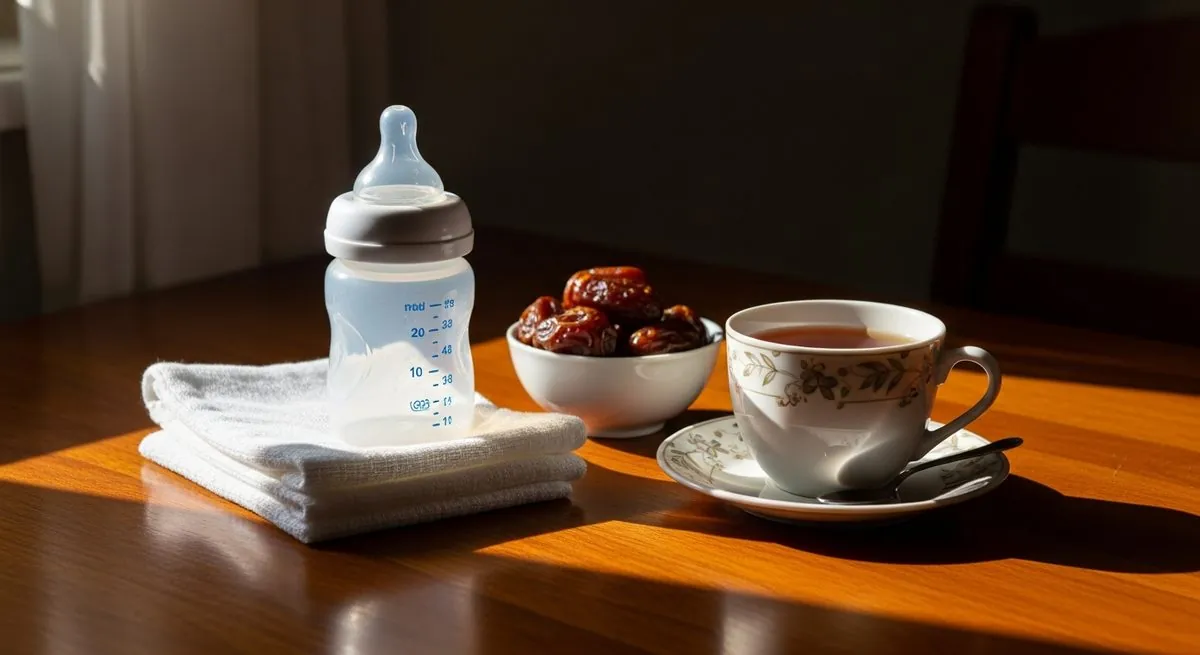
She wakes up before the rest of us, every day. She heats water for the baby's bottle. She prepares whatever breakfast is possible: bread if there is flour, biscuits and tea if there is not. She bathes the baby with a small basin and a measured amount of water. She washes Ibrahim's face and combs his hair. She does this without being asked, without complaint, every single morning, for the entire duration of this war so far.
She has not left the apartment alone in over a year. Going outside is too dangerous. The trips to the market are mine. She manages everything indoors, which means she is alone with two children, one of them an infant, in the same small space, every day, with rationing and uncertainty and noise from outside, and somehow she remains the calm center of the family.
I do the public-facing work. I write the articles, manage the fundraiser, deal with messages, document spending. She does the actual work of keeping a family alive: feeding people, comforting a baby, soothing Ibrahim when he cannot sleep, making the apartment feel like a home rather than a shelter. Her work is unrecognized in the public version of this campaign. I want at least one article on this site that recognizes it.
Pregnancy and Birth in Gaza, 2025
Our daughter was born in December 2025. My wife was pregnant for nine months in Northern Gaza during active war. There was no consistent prenatal care. There was no reliable nutrition. The hospital where she eventually gave birth was overwhelmed and partially functional.
The labor was longer than her labor with Ibrahim. There was no anesthesia. There was no postpartum follow-up of any meaningful kind. She held the baby on a hospital floor surrounded by other women who had no better option than to be there.
She came home two days later. She has been the baby's primary caregiver every minute since. She breastfed when her own nutrition allowed. She supplemented with formula when it did not. She has done this on broken sleep, in stressful conditions, without the support network most new mothers in any country rely on.
I do not know how she does it. I am writing this because I want it to be on the record that she does it.
What She Says When I Ask How She Is
She says she is fine. She always says she is fine. She is not always fine, but the family has decided collectively (without ever discussing it) that the answer to "how are you" is "fine" because the alternative is too heavy to carry.
Sometimes when I am out and she is alone with the children, I imagine the silence in the apartment. The baby crying. Ibrahim asking questions. Her keeping it together because there is no other choice. I do not have a way to express this except to say that she has earned every donation that comes to this family in a way I have not.
What She Wants, If You Are Asking
I asked her what she would want if anyone offered. Here is what she said, in approximate translation:
- "That my children eat without me worrying about tomorrow."
- "That the baby has formula when she needs it."
- "That Ibrahim sees other children sometimes."
- "That this ends."
The first three are things donors can help with. The fourth is beyond any of us.
Support a Mother of Two in Northern Gaza
Your donation goes directly to the household she runs. Food, formula, water, rent.
A Final Thought
The story of this war is often told through statistics. Casualty counts. Displacement numbers. Aggregate suffering. The story is also told, less often, through individuals who write public-facing accounts: men like me who set up fundraisers and write articles and ask for help.
The story is almost never told through women like my wife who do not write public accounts, who keep their pain private, who do the relentless invisible work of maintaining a family in conditions that make maintaining anything difficult. That story is not easier or more legitimate than mine. But it is less told, and I want her version on the record.
If you have donated to this family at any point, you have donated to her work as much as to anything I have done. Thank you on her behalf.