The grid here died on a date I will never forget. Around the seventh of October 2023, the electricity was cut and the fuel for Gaza's only power plant stopped arriving. By the eleventh of that month the plant had run dry, and the whole of Gaza fell into darkness. It has effectively stayed that way ever since — through 2024, through 2025, and now here in the middle of 2026.
I want to explain the Gaza electricity crisis of 2026 the way I live it, not the way it sounds in a headline. I am Mohammed Z. Al-Shanti, an agricultural engineer, displaced in the north with my wife, my six-year-old son Ibrahim, and our baby daughter, who was born in December 2025 and is about six months old now.
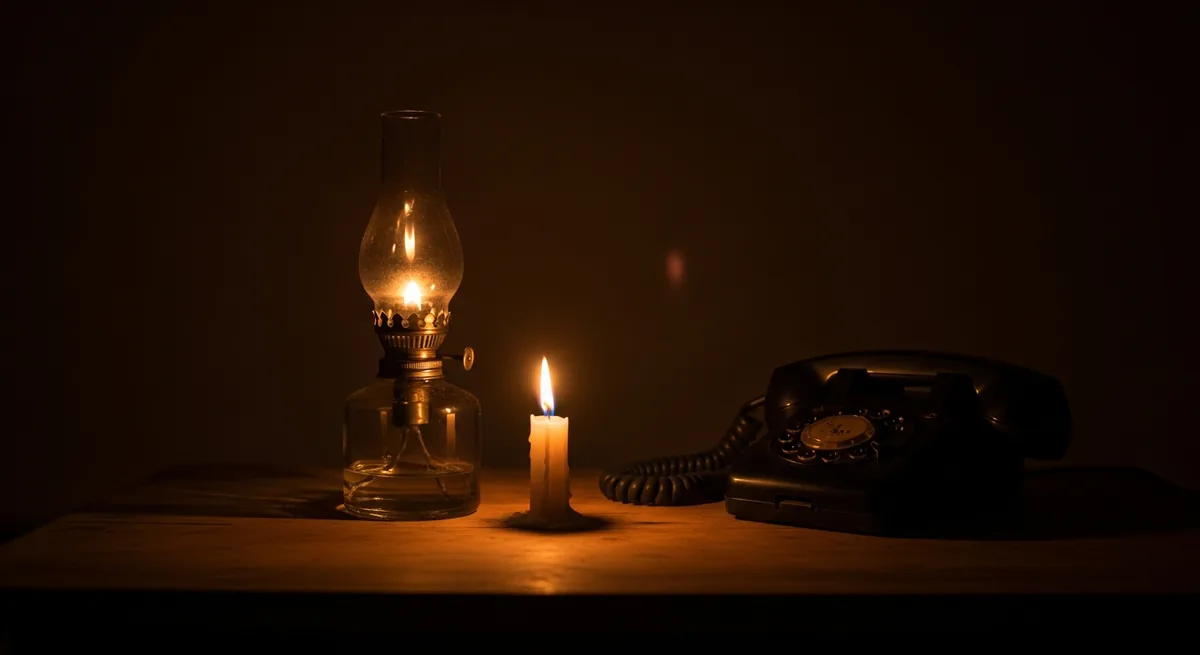
When people abroad picture a blackout, they imagine a few hours without lights, an inconvenience. For us it is the permanent condition of life. No refrigerator. No reliable way to charge the one phone that connects us to the world. No fan against the June heat. A single candle, and then the dark.
This article is about power — what it costs, how we find it, and why a small solar panel would change my family's daily life more than almost anything else a donor could give.
Let me start with the scale of what was broken, because it explains why this is not a problem that fixes itself in a week or a month. The grid did not simply switch off. It was physically dismantled by nearly three years of war.
In September 2025, the Gaza Electricity Distribution Company reported at least $728 million in damage to the network. About 70% of the relay system was destroyed. More than 5,000 kilometres of power lines and over 2,200 transformers were damaged or destroyed. When you read those numbers, understand what they mean on the ground: even if fuel and electricity were restored tomorrow, there is, in many places, no longer a network left to carry them to our homes.
How the Gaza blackout of 2026 actually began
The sequence was fast and total. Israel cut the electricity supply and the fuel that Gaza's sole power plant depended on around the seventh of October 2023. The plant kept running on its remaining reserves for a few days, and then, around the eleventh of October, it ran dry. From that point Gaza had no central power at all.
What surprises people is not that the lights went out — it is that they never came back on. Through all of 2024 and 2025, the grid stayed effectively non-functional. We are now in mid-2026, and for my family the situation is unchanged: there is no electricity coming from any wall socket, anywhere we have lived since being displaced.
So the question stopped being when will the power return and became how do we make our own, today, with whatever we can find.
What families use now: solar panels, car batteries, and generators
With no grid, every household in Gaza became its own tiny, improvised utility. There are really only three sources of power left, and each is fragile:
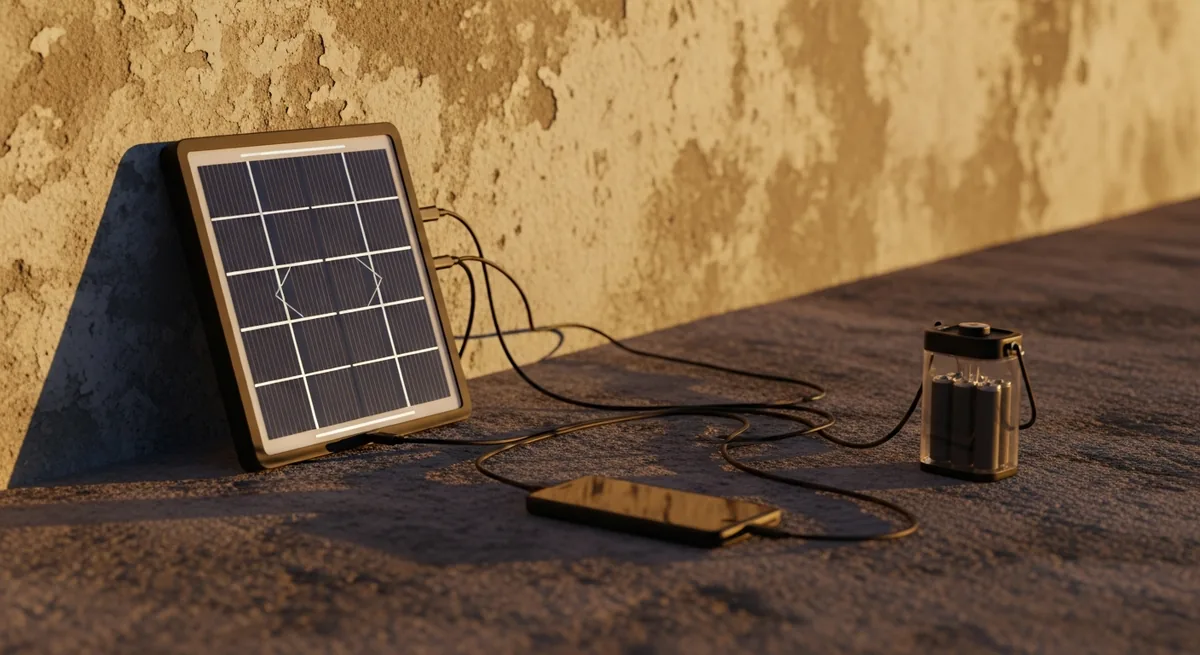
- Small solar panels — the most reliable option, because the sun still rises. A modest panel and a battery can charge phones and run a small lamp. But panels are scarce and expensive, and many were buried or destroyed.
- Car and salvaged batteries — pulled from wrecked vehicles, charged at solar points, and used to power a light or a fan for a few hours. They wear out and are hard to replace.
- Private generators — loud, thirsty for fuel, and increasingly impossible. Fuel is barely available and the price is punishing. Many generators were also destroyed in strikes.
The hard truth is that only a minority of households have any independent power at all. Most families have nothing once the sun goes down. We are among the many, not the few — which is exactly why a panel of our own sits at the very top of my list of needs.
The charging economy: how to charge a phone in Gaza now
Out of this scarcity, an entire informal economy has grown around a single act that the rest of the world does without thinking: charging a phone. If you have ever wondered how to charge a phone in Gaza in 2026, the answer is that you pay someone who has a solar panel, and you wait.
At a solar charging point, the going rate is about 2 to 5 shekels per phone — roughly $0.55 to $1.35 each time. That sounds small until you live it. To reach a charging point I often walk a long distance, then wait hours in a line for my turn, then walk home before dark. A full day can be spent on the single task of putting charge into one device.
And it is one device. We have one phone for the whole family. It is not entertainment. It is our lifeline — to relatives outside Gaza, to news about aid distributions, to any emergency where I might need to reach someone. When the battery dies, we are not bored. We are cut off.
Why this is survival, not convenience
Power in Gaza today means: light after dark for two small children so they are not frightened; charge in the one phone that connects us to family, aid news, and emergencies; a small fan against the summer heat; and — because nothing can be refrigerated — the ability to shop for food daily, at inflated prices, because we cannot store anything.
What the blackout costs my family each month
I keep careful records of what we spend, because I publish my budget and my receipts for anyone who supports us. Power and connectivity are a real, recurring line in that budget — and they are separate from, and on top of, everything else we need to survive.
Connectivity — keeping the phone on a network so it can actually be used — runs about $100 a month in our budget. But that figure does not include the physical act of putting electricity into our devices. On top of connectivity we pay to charge at solar points, and we buy disposable batteries, candles, and matches when we can find them.
The monthly cost of power for my family
What it takes just to keep one phone alive and one room lit, mid-2026
| Power need | What it is | Rough monthly cost |
|---|---|---|
| Connectivity | Mobile network so the phone is usable | $100 |
| Phone charging | Solar-point charging, ~$0.55–$1.35 per charge | $10–$15 |
| Batteries & lamp | Disposable batteries, candles, a rechargeable lamp | ~$25 |
| Total power & light | Recurring, every single month | ~$135-$140 |
Sixty-five to seventy dollars a month, indefinitely, simply to keep one phone charged and one room lit after sunset. We pay it because the alternative — total darkness and total isolation — is worse. But it is money we hand over again every month with nothing to show for it at the end.
The case for solar: a one-time cost that ends the cycle
This is the part I most want donors to understand, because it is where a gift does the most good. Every shekel I spend at a charging point is gone forever. It buys a few hours of charge and then I must pay again. It is renting electricity by the phone, at the worst possible rate, for an unknown number of years.
A small solar panel and a battery break that cycle. The sun is free and it is not under blockade. With our own panel I would no longer walk for hours or pay strangers to charge our phone. I could keep a lamp on for Ibrahim at night, run a small fan for the baby in the heat, and keep the phone alive for emergencies — every day, for years, from one purchase.
What a donor's gift buys in power
From a single phone charge to ending the cycle entirely
Think of it this way: a solar panel would replace what we spend on charging and batteries, about $35 to $40 every month. But a panel here costs around $1,500 and a usable battery costs more again, so it is years of savings, not months, and we cannot reach it on our own. Connectivity is separate: even with solar we still pay about $100 a month to keep a mobile signal.
A day in the dark: how we ration power
To make this concrete, here is how power shapes an ordinary day for us in June 2026.
None of this is dramatic. It is just the quiet arithmetic of a family making a few watts of electricity stretch across twenty-four hours, every day, with no end date.
Why power touches everything else
It would be easy to file electricity under "comfort" and move on. But in Gaza, the blackout is not a separate problem — it multiplies every other one. Let me show how it connects to the things that keep us alive.
No fridge, daily prices
Without refrigeration we cannot store anything, so we buy food day by day at inflated prices. Power loss makes hunger more expensive.
One phone, our only lifeline
A dead phone means no contact with relatives, no aid news, and no way to call for help in an emergency. Charge is safety.
Light against fear
Ibrahim is six and has known mostly war. A small light after dark is not a luxury for him — it is the difference between calm and fear.
Heat with no relief
In the June heat, a newborn suffers without even a small fan. Independent power would let us run one through the worst hours.
This is why, when I am asked what we most need, I do not only say food or formula or rent — though we need all of those. I say power, because power makes everything else a little more possible.
How you can help us power our life
I will be direct and honest, the way I try to be about everything. We have no income. I am a registered agricultural engineer with no land to work and no salary. Every form of support we receive, I document — I publish receipts and spending updates, and my identity, my engineer registration, and our displacement papers are all available on our verification page.
The most direct way to help is a card gift through our verified GiveSendGo fundraiser. If you prefer, we also accept several cryptocurrencies. Here is what your gift translates into, in power:
- $10–$15 keeps our one phone charged for a month at solar points.
- $25 buys batteries and a rechargeable lamp so our children are not in the dark.
- $120–$200 funds a small solar panel and battery — a one-time gift that ends the monthly charging cycle and changes our daily life for years.
Help my family power its life in the dark
A few dollars charges our phone for a month. A one-time gift of $120–$200 buys a small solar panel and battery, and ends the cycle for good. I publish receipts for everything.
Give by card through our verified GiveSendGo fundraiser, or see /donate-crypto for BTC, ETH, USDC, USDT-TRC20, and SOL.
Whatever you are able to give, thank you for reading to the end. Understanding the Gaza electricity crisis of 2026 from the inside — what it costs, why it matters, how it shapes every hour — is itself a kind of help. It means we are not living in the dark unseen.