How Gaza families survive the summer heat
In the summer of 2026, about one million people in Gaza are still living in tents. Daytime temperatures sit around 30 to 32 degrees Celsius and climb past 35 in a heatwave, and the coast adds heavy humidity. Inside a tent it is worse, like a greenhouse. Most families get by on under six liters of water a day per person, which is less than half of the emergency minimum, so they ration between drinking, cooking, and washing. There is rarely power for a fan. Doctors are seeing more heatstroke, and it hits children hardest. I live this every day. Here is what the heat is really like, and what actually helps.
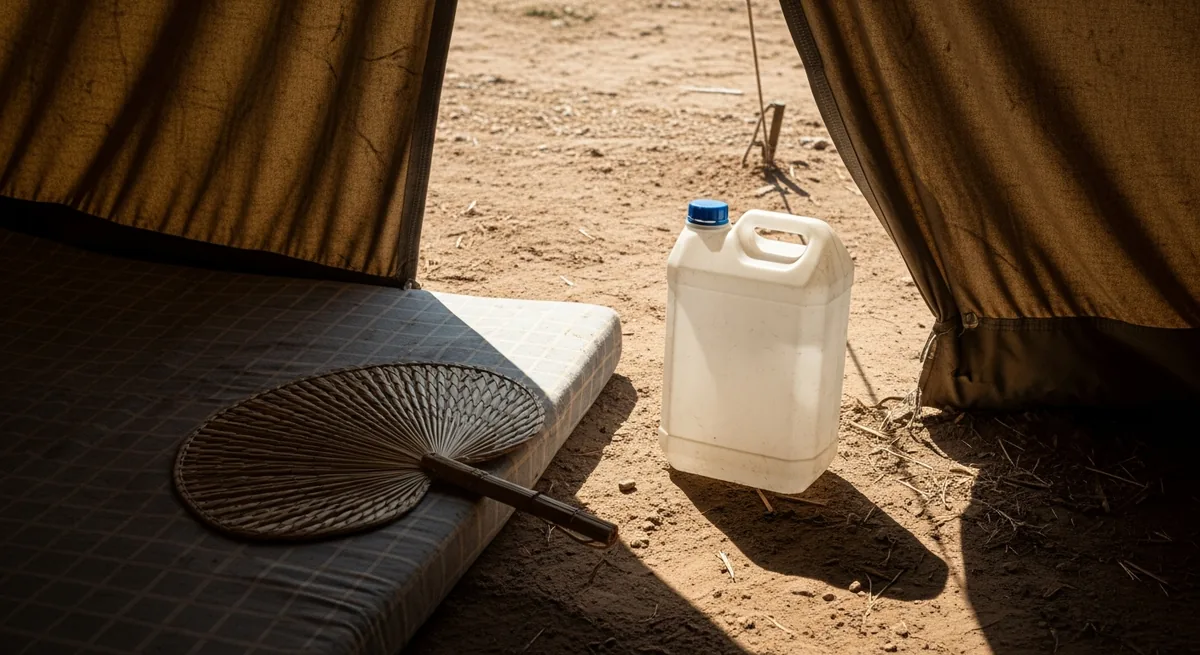
What the heat is actually like
People who have not lived it think of summer heat as an uncomfortable afternoon. Here it is a thing you cannot get away from. The sun comes up and by mid morning the air is already heavy. By noon the light is white and hard and the ground gives the heat back at you. There is no cool room to step into, no working air conditioner anywhere near us, and for most families no fan either, because there is no power to run one.
My family is in a damaged apartment, which makes us the lucky ones this summer. The concrete walls bake all day and stay warm deep into the night, so the rooms never really cool down. But a short walk from us are the tents, and the tents are another level of suffering. Canvas and plastic trap the sun and hold it. People describe their own shelter as a greenhouse or an oven, and they are not exaggerating. There is no ventilation, no shade that lasts, and nowhere else to go.
At night it does not end. The heat that soaked into everything all day comes back out. Then the insects arrive, mosquitoes at night and flies all day, so even the people who could sleep through the heat cannot sleep through the biting. You lie there wet with sweat, fanning a child with a piece of cardboard, waiting for a breeze that mostly does not come.
| The Gaza summer, 2026 | Figure |
|---|---|
| People still living in tents | ~1 million |
| Typical daytime temperature | 30 to 32°C |
| Heatwave temperature | 35°C+ |
| Water per person, per day (typical) | under 6 L |
| Emergency minimum water standard | ~15 L |
| Trucked water price | $85 / 1,000 L |
| Households still lacking shelter items | ~850,000 |
Those are not numbers I collected from a report. I live inside them. But they match what the aid agencies are saying too, so you do not have to take only my word for it.
Water is the whole battle
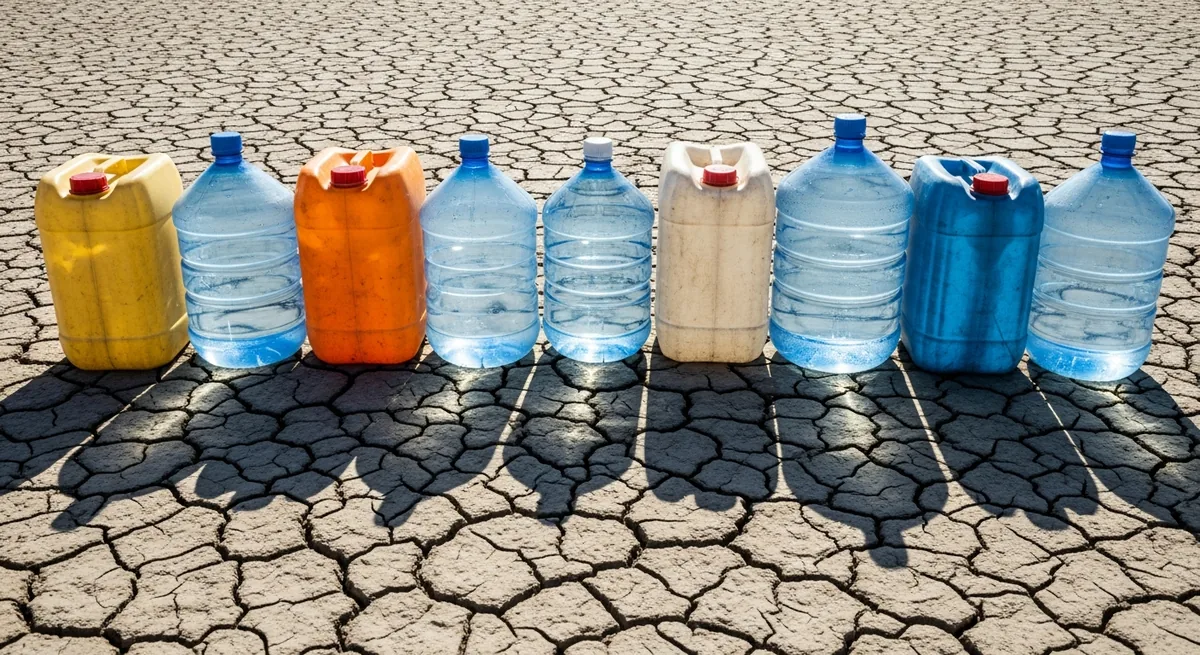
In winter the fight was warmth. In summer the fight is water, and it is harder, because you need much more of it and there is not more of it to be had. When you are surviving on under six liters a day, every liter has three jobs already. You drink it. You cook with it. You try to wash a baby with what is left. In this heat a body needs far more than six liters just to stay safe, and there is no way to give it. So you make choices no one should make, like deciding whether to drink now or save it to cool the children down later.
We buy our water from trucks, because there is no running water in the building. It costs about sixty dollars for a thousand liters. In the cooler months a delivery like that lasted us around ten days. In this heat it lasts about seven, because we use more and because some of it evaporates before we can use it. That is a real price rise hidden inside a price that did not change. The families in tents have it worse again, filling containers from schools or other sites and carrying them back through the heat.
No power means no way to cool down
The cruelest part is that the one simple thing that would help, moving air, is out of reach for most people. A fan needs electricity, and the power is off far more than it is on. Families who have managed to get a small solar panel and a battery can run a fan for a few hours and charge their phones. Everyone else waits for the sun to go down and hopes for wind. A solar setup is the most useful thing a family can have in this heat, but a panel alone costs around $1,500 here and a working battery far more, so almost no one has one.
This is why, in the heat, a donation often turns into very practical things. Not everyone spends it the same way, because not everyone needs the same thing first. One family needs water above all. Another needs a fan and a way to power it. Another needs a lighter cover for a tent that has become unbearable. This is the honest argument for giving cash directly to a family instead of sending one fixed item to everyone. The family knows which battle it is losing this week.
The children and the heat
Heat is dangerous for everyone, but it is most dangerous for babies, small children, and the elderly. Doctors here are seeing more cases of heatstroke and dehydration arriving at emergency departments, and many of them are children. A small child cannot tell you early enough that something is wrong. They just get quiet, then floppy, and by then it is frightening.
My daughter is a baby. In this heat she sleeps badly and wakes often, and there is only so much we can do for her. We keep her out of the direct sun, we use water we would rather drink to cool her skin, and we fan her. My son Ibrahim drinks more than he used to and asks why it is so hot, and I do not have a good answer for a boy his age. You cannot explain a war to a child through the heat of it.
The heat does not leave at night. By noon the apartment is like an oven, and the concrete gives the heat back all night, so the baby wakes and cries. We fan her with a piece of card. Still, we are the lucky ones. Down the street the families in tents have it far worse.
What actually helps in the heat
If you want to help a family through this summer, these are the things that make a real difference, in the order that most families would rank them. A direct donation lets a family put your help against whichever of these is hurting most right now.
Clean water $25 to $85
The whole battle. Eighty five dollars is a full truck delivery of a thousand liters. About a hundred dollars covers a week of water for four people.
Solar panel and battery $1,500 and up
Here a simple panel alone runs about $1,500, and a decent battery costs several times more. It is the one thing that would change the summer most, and it is the reason almost no family has power for a fan.
Formula and infant care $28 a tin
Heat is hardest on babies. Formula must be mixed with clean, safe water, which makes the water need even higher.
Shade and lighter covers varies
For the families in tents, materials that cut the sun and let some air through can lower the inside temperature enough to sleep.
Cash given directly is the most flexible help of all, because it becomes whichever of these a family needs first. If you would like to understand the full monthly cost picture behind these numbers, we keep a live price tracker and a monthly survival budget updated from our own receipts.
Your help becomes water and shade, this week.
Every gift comes with receipts for anything major. In this heat, $25 is a week of drinking water for my children.
Questions people ask about the heat
How hot does it get in Gaza in summer?
Daytime temperatures average around 30 to 32 degrees Celsius and pass 35 during heatwaves, with heavy coastal humidity. Inside a tent it feels much hotter. Families describe their shelters as greenhouses, and heatstroke cases are rising, especially among children.
How much water does a family have in summer 2026?
Most families live on under six liters per person a day, less than half the emergency minimum, and ration between drinking, cooking, and washing. Trucked water costs about $85 per 1,000 liters, and in the heat a delivery that used to last ten days now lasts about seven. See our water crisis breakdown.
Why can't families just use fans or air conditioning?
Because there is rarely power. The electricity is off far more than it is on, so a fan sits useless unless a family has a small solar panel and battery, which most do not. We wrote about the blackout and solar power in detail.
What is the single most useful thing to donate in the heat?
Clean water first. Solar power to run a fan and charge phones helps enormously, but it is expensive here, a panel alone is around $1,500, so it is out of reach for most. Cash given directly to a verified family is the most flexible, because the family can put it against whichever need is worst that week. Here is how to find and verify a real family.