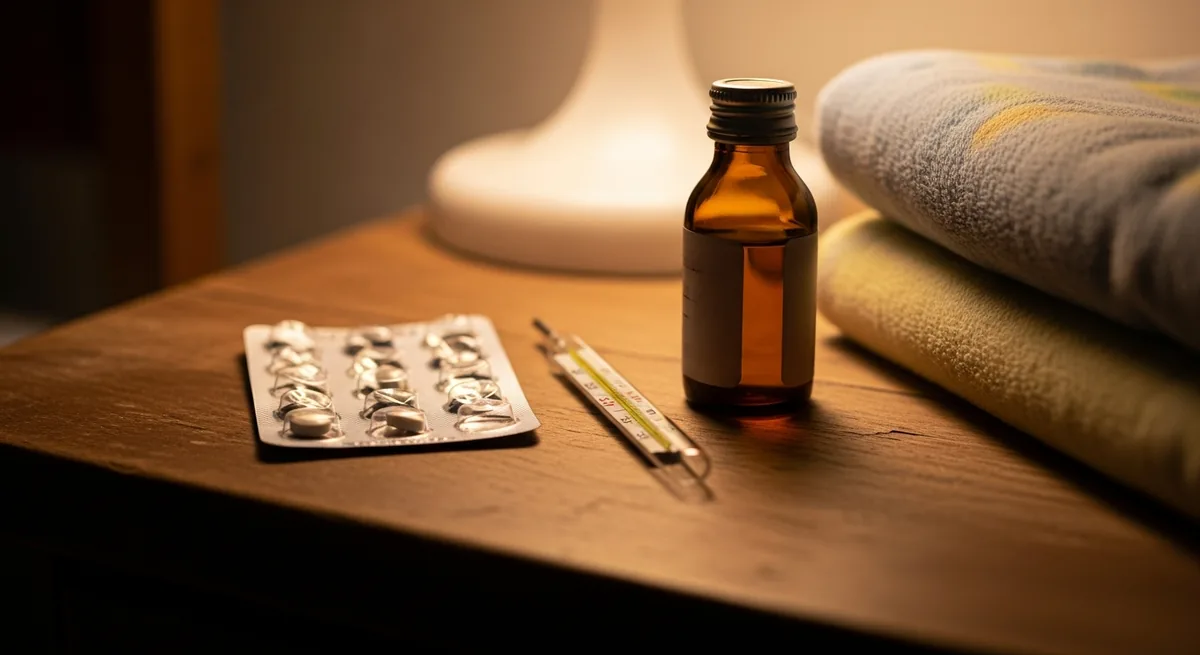
My daughter was born in December 2025. She is about seven months old now, and twice this spring she has woken in the night with a fever and the kind of diarrhoea that frightens any parent of a small baby. The first time, I walked to three places before I found oral rehydration salts. The second time, I could not find them at all.
I am Mohammed Z. Al-Shanti, an agricultural engineer, registered with the Palestinian Agricultural Engineers Association, displaced with my family in northern Gaza. I have no income. My wife was a teacher. My son Ibrahim is six. And I have learned, the hard way, what the gaza medicine cost in 2026 really is, not as a statistic, but as a thing I have to pay or go without.
This article is only about one thing: medicine and medical care. Not the general food budget, not the wider famine, those I have written about elsewhere. Here I want to explain, honestly and with numbers, what healthcare in Gaza looks like in 2026, why even a simple antibiotic is hard to find and expensive when you find it, and what a donation toward medical aid for my family actually buys.
I document everything I can, and where I cite the broader picture I attribute it to the agencies who reported it. My strongest evidence, though, is my own family's costs.
Let me begin with the part that surprises people most. The problem in Gaza in 2026 is not only that medicine is expensive. It is that half of it simply does not exist anymore, at any price.
Half of Gaza's essential medicines are gone
As of March 2026, according to WHO and the health cluster working in Gaza, roughly 312 of 622 essential medicines were completely out of stock. That is about half of the medicines a functioning health system is supposed to keep on hand at all times. Around 47% of essential medicines were at zero stock.
It does not stop at the medicines themselves. About 59% of medical consumables (the gloves, syringes, dressings, IV lines that a clinic needs to do anything at all) were depleted, and roughly 87% of laboratory testing materials were gone. So even diagnosing what is wrong with a sick child has become difficult.
And nearly half of the medicines for chronic disease (diabetes, hypertension, asthma, thyroid conditions) were reported critically low. These are the medicines people take every single day to stay alive. When they vanish, people do not feel it gradually. They reach the bottom of a box and there is nothing to refill it with.
Medicine and supplies stockouts in Gaza (early 2026)
As reported by WHO and the health cluster. These are shares of essential items unavailable or critically low.
| Category | Status | Share unavailable / critical |
|---|---|---|
| Essential medicines | Out of stock | ~47% at zero stock (about 312 of 622 items) |
| Medical consumables | Depleted | ~59% |
| Laboratory testing materials | Depleted | ~87% |
| Chronic-disease medicines | Critically low | Nearly half |
I am not a doctor. I am an engineer. But you do not need a medical degree to understand what these numbers mean when your daughter is burning with fever at two in the morning and the salts that would rehydrate her are simply not on any shelf you can reach on foot.
The hospitals that should treat my children are mostly broken
When people abroad imagine a sick child in Gaza, they often picture a hospital. I understand why. But the hospital, for most of us, is no longer what it was.
WHO has reported that about 34 of Gaza's 36 hospitals (around 94%) have been damaged or destroyed, and that only about 16 of 36 (roughly 44%) were even partly functional. Partly functional does not mean normal. It means running far beyond capacity, with too few beds, too few staff, too little of everything. WHO also documented around 22 attacks on hospitals and health facilities since the start of 2026 alone.
So when my baby is sick, going to a hospital is not a simple decision. The nearest functioning one may be far, overwhelmed, and out of the very thing she needs. A parent quickly learns that arriving at a hospital is no guarantee of treatment. Often the most useful thing I can do is try to find the medicine myself, in a private pharmacy, and pay for it.
What 'collapsed health system' means in practice
It means about 9 in 10 hospitals damaged or destroyed, about half of essential medicines at zero stock, and aid organisations unable to bring new supplies in. For a family, it means the burden of finding and paying for medicine has shifted onto us, exactly when we have the least money.
Why even aid groups cannot bring medicine in
You might reasonably ask: where are the big medical organisations? Some are here, and they are doing heroic work. But they are blocked too.
MSF (Doctors Without Borders) reported that it had been unable to bring medical supplies into Gaza since 1 January 2026, and that it had been forced to stop accepting new chronic-disease patients. When an organisation of that size and skill cannot get supplies through the crossings, you understand that the shortage is not about money or willingness. It is about access. The medicine exists in the world. It just cannot reach us.
This is the part I most want donors to understand. The reason I ask for help directly, family to family, is not that I distrust the aid system. It is that for daily survival medicine, the formal system often cannot reach my children in time. A direct transfer to me, today, lets me buy what is available in a private pharmacy this week, before it too runs out.
What a sick child actually costs my family
Here is the honest arithmetic. In our monthly survival budget, medicine is about $60. That figure assumes a relatively calm month. It does not survive contact with a real illness.
One sick child (a fever, a chest infection, my baby's diarrhoea) can wipe out a week of our entire household budget. With clinics overwhelmed and pharmacies nearly bare, a single course of antibiotics is both hard to find and, when found, far more expensive than it was before the war. The scarcity is the price. The less of something there is, the more the few who still have it can charge.
Let me translate it into the amounts a donor can actually give, because I think it helps to see exactly where a gift goes.
What medical help costs my family in 2026
Real figures from our household. Prices for medicine in Gaza move with scarcity, so treat these as typical, not fixed.
I want to be precise about that table, because precision is the only honest thing I have to offer. About $20 covers fever care and rehydration salts for my daughter when I can find them. About $40 to $60 covers a course of antibiotics or a private consultation. About $60 is our medicine budget for a whole month, the figure I have to defend against every cough, every infection, every night-time fever.
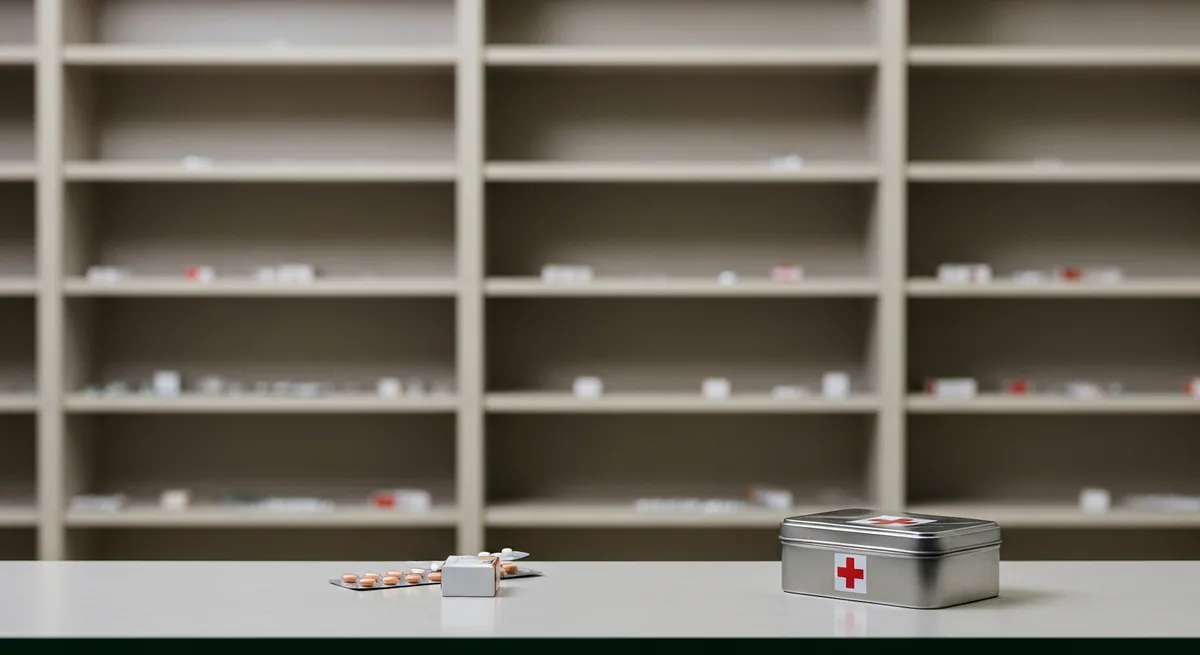
The night my daughter needed salts and I could not find them
I want to tell one story, not to move you with drama, but because it is the truest way I know to explain the cost of medicine in Gaza.
My daughter is about six months old. Because of malnutrition and stress, my wife's breastfeeding was disrupted, so our baby depends partly on formula, and her stomach is fragile. One night in spring she developed diarrhoea. For a baby that small, fluid loss is dangerous quickly. The treatment is simple and cheap in any normal country: oral rehydration salts, a sachet that costs almost nothing.
I walked to three places. The first pharmacy had none. The second had run out that morning. The third had a small box but the price had climbed to several times what I remembered, because everyone was looking for the same thing. I bought it. It was, in dollar terms, in that $20 band of fever-and-rehydration care. I paid it without hesitating, and then I worried about how to make the rest of the month's budget hold.
That is the cost of medicine in Gaza in 2026. It is not one number. It is the distance you walk, the time you lose, the scarcity premium you pay, and the part of next week's food money you quietly give up so your child can drink something that will keep her alive.
Why scarcity makes medicine more expensive, not just rarer
People sometimes assume that in a crisis, prices should be controlled or fixed. The reality on the ground is the opposite. When about half of essential medicines are at zero stock and aid cannot resupply the system, whatever is left flows into private hands, and private pharmacies price it according to how little of it remains.
- A medicine that is out of stock everywhere has, in effect, an infinite price, you simply cannot buy it.
- A medicine that exists in one pharmacy in small quantity carries a steep scarcity premium over its pre-war price.
- Consumables and lab materials being depleted (around 59% and 87% respectively) means even getting a proper diagnosis can cost extra, or be impossible.
- Because hospitals are overwhelmed, more care shifts to paid private consultations, which adds a consultation cost on top of the medicine cost.
So the same illness that might cost a few dollars elsewhere becomes a $40 to $60 event here, and a chronic condition that needs a steady monthly medicine becomes a recurring crisis whenever the supply runs dry.
What your donation buys in medicine, specifically
I never want anyone to give blindly. So here, as plainly as I can, is what specific amounts of medical aid for my family translate into. Every dollar reaches us directly, and I publish receipts and spending updates.
A sick night, handled
Fever care and oral rehydration salts for the baby when I can find them, the exact thing I walked three pharmacies to buy.
An infection treated
A full course of antibiotics for a chest infection, or a private consultation when the hospital cannot take us.
A month of cover
Our entire monthly medicine budget, the buffer that lets me say yes when a child needs treatment instead of choosing between medicine and food.
Margin to breathe
Even a small gift rebuilds the cushion that one bad illness erases, so the next fever does not become a crisis.
If you want to see how these medical figures sit inside our whole household, I keep a fully itemised monthly survival budget, and a broader breakdown of what a donation buys in Gaza.
How to send medical aid to my family, simply
If you decide to help with the cost of medicine, here is exactly how it works. I have tried to make it as direct and as transparent as I can.
Why I ask family-to-family, not through an appeal
For daily survival medicine, the formal aid pipeline often cannot reach my children in time, MSF itself has been unable to bring supplies in since January 2026. A direct gift lets me buy what is on the shelf this week, before it runs out, and show you the receipt.
I am careful never to overstate what I know. I cannot quote you a hospital's internal records or a price I have not paid. What I can tell you is what is true in my own home: the medicine is scarce, when it exists it is dear, and the gap between a fever at midnight and the treatment for it is now measured in money I do not have.
Help cover the cost of medicine for my children
About $20 buys fever care and rehydration salts for my baby. About $40-$60 covers a course of antibiotics. About $60 is our medicine for a whole month. You can give by card through our verified GiveSendGo fundraiser, and I will show you the receipt.
ID, engineer registration and displacement documents are on my verification page.