How do families in Gaza cook without gas?
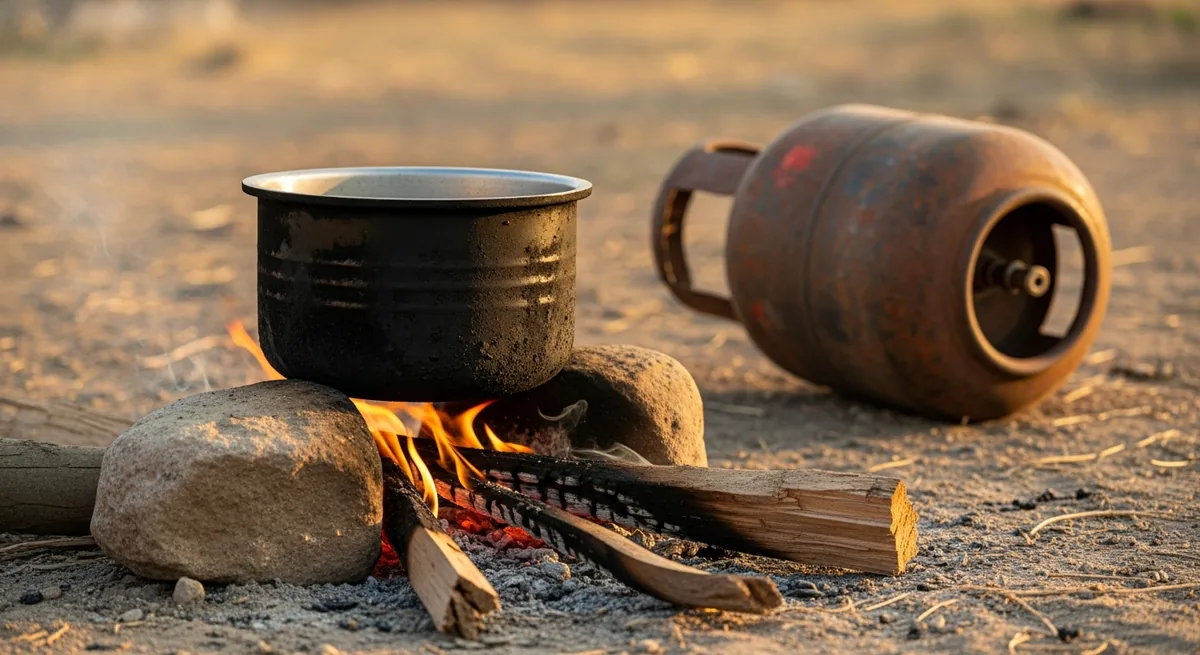
Most of us cook on open fires now. As of 2026, reporting puts the share of Gaza households with access to cooking gas at around 1.5 percent. More than half of families rely on firewood, and roughly 43 percent burn waste materials or plastic to heat a pot. Supplies coming in have run at about 20 percent of monthly need, and household distribution slowed from once every six weeks to once every three months. I am a father in Northern Gaza and this is what that looks like in a kitchen: a fire made of broken wood on the ground, a blackened pot on three stones, and a decision every single day about what is safe enough to burn.
What happened to the gas
Before the war, cooking was the least dramatic thing in our lives. You turned a knob, there was a flame, and you made tea. The cylinder lasted weeks and when it ran out you swapped it for a full one at a shop down the road. Nobody thought about it, which is exactly what a working system feels like.
That system is gone. The amount of cooking gas allowed into Gaza fell to a fraction of what two million people need, and the fraction does not stretch. When the numbers say supply is running at about a fifth of the monthly requirement, it does not mean everyone gets a fifth of what they need. It means a small number of households get a cylinder and everyone else gets nothing. The waiting time between household distributions stretched from about six weeks to about three months. Three months is not a shortage. Three months is a different way of life.
| Cooking fuel in Gaza, 2026 | Figure |
|---|---|
| Households with access to cooking gas | ~1.5% |
| Families relying on firewood | over 50% |
| Families burning waste or plastic | ~43% |
| Gas supply versus monthly need | ~20% |
| Time between household distributions | ~3 months |
| Cooking gas, price per kg (150 NIS) | ~$45 |
| A full 12 kg cylinder (1,800 NIS) | ~$600 |
| Our monthly rent, for comparison | $500 |
Those percentages come from reporting on the fuel crisis this year. The last line is ours, from our own receipts, and it is on our monthly price tracker along with everything else we buy.
What people actually burn
When the gas goes, you do not stop eating. You start burning whatever will hold a flame long enough to boil water. Walk through any neighbourhood here in the late afternoon and you can read the whole economy in the smoke.
Firewood, if you can afford it
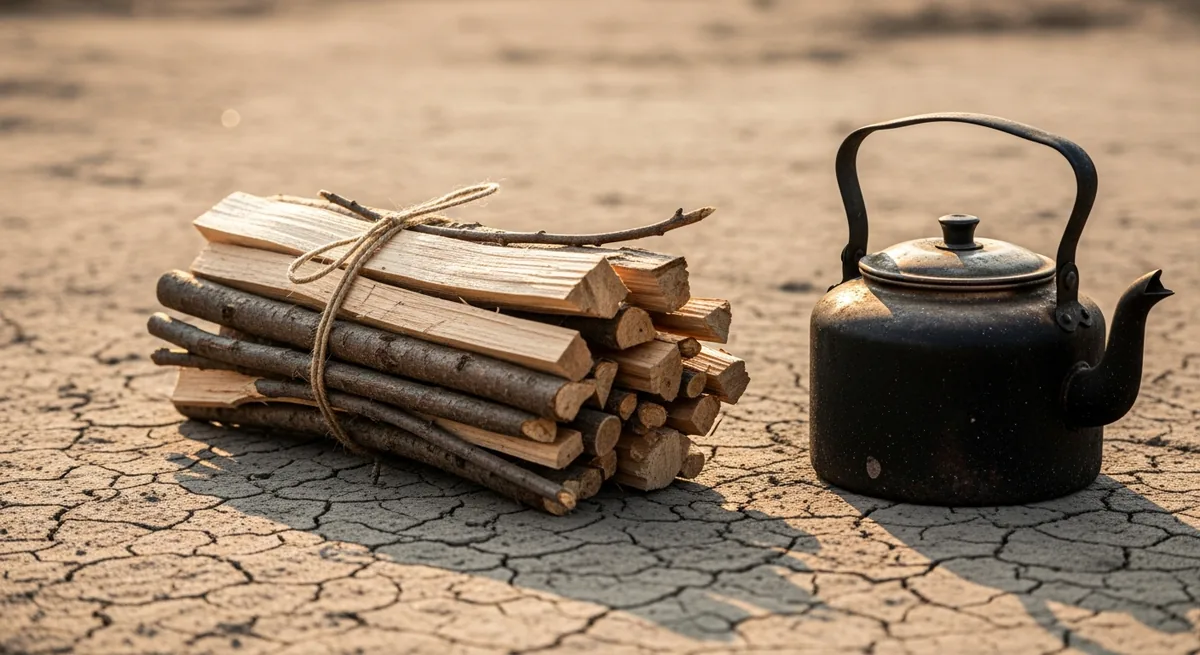
Wood is the best of the bad options and more than half of families use it. It burns clean enough, it is predictable, and you can cook a proper meal on it. The problem is that Gaza is not a place with forests, and the demand is now two million people. So the price climbed, and it keeps climbing, and every scrap of usable wood has already been picked over. People burn broken furniture, door frames, pieces of destroyed homes, crates, pallets. There is something particular about cooking dinner over the wood of a house.
Cardboard, paper, and fabric
These burn fast and hot and are gone in minutes, so they are a bridge, not a fuel. You use them to start something better or to boil one pot quickly when there is nothing else. A family will save cardboard the way you might save foil.
Plastic and waste, which is the part that frightens me
Around 43 percent of families burn waste materials or plastic. I want to be careful and honest here. People are not doing this out of ignorance. Everyone knows the smoke is poison. They do it because a child is hungry now and there is nothing else in reach, and a mother is not going to explain toxic fumes to a four year old who has not eaten since morning. The person cooking stands directly over that smoke and breathes the most of it. Aid groups have warned about exactly this, and in crowded tent areas the smoke does not stay with the family that lit the fire. It goes to the neighbours, the children, the elderly, all of them.
The trade nobody should have to make: burning plastic to cook is a known health hazard, and it is also the only way some families can put warm food in front of their children today. Given the choice between smoke and hunger, people choose smoke. That is not a failure of judgement, it is the absence of any option.
What cooking costs us now
Our family is luckier than most because we are in a damaged apartment rather than a tent, and because kind strangers help us. Even so, the fuel line in our budget has become one of the ones I dread. In August 2026 we budget about 210 dollars a month for cooking fuel between gas when we can find it and wood when we cannot. Cooking gas costs about 150 NIS per kilogram, so a full 12 kg cylinder comes to roughly 1,800 NIS, close to 600 dollars. Our rent is 500 dollars. A cylinder of gas costs more than the roof over our heads, which is the clearest way I can explain why we cook on wood.
The hidden cost is time. When you cook on wood you have to gather or buy the wood, build the fire, wait for it to be ready, watch it constantly, and start again for the next meal. My wife spends hours on what used to be a knob and a match. That is time not spent with the children, not resting in this heat, not doing anything else. Fuel poverty eats the day, not just the budget.
The other hidden cost is what we eat. Food that needs long cooking, dried beans and lentils and the cheap filling things, needs a lot of fuel. So the cheapest food is the most expensive to cook. Families end up buying more bread and fewer proper meals, which is worse nutrition at exactly the moment when nutrition matters most. If you want the full picture of what a month costs us, it is in our monthly survival budget.
The gas ran out on a Tuesday. I remember because my wife had planned lentils and had to change the whole meal in the time it took to hear the cylinder go hollow. That night we ate bread and a little oil and the children did not complain, which was somehow worse than if they had.
Why this connects to everything else
Cooking fuel does not sit in its own box. It touches water, because boiling water to make it safe takes fuel, and if fuel is short people drink water they should have boiled. It touches the electricity crisis, because a household with power could use an electric hotplate and skip the fire entirely, and almost nobody has that. It touches the summer heat, because standing over an open fire in August is its own kind of misery. And it touches health, through the smoke, through undercooked food, and through what families stop eating when cooking becomes too expensive.
This is the thing I most want people outside to understand. There is no single crisis here that you could solve on its own. There is one crisis wearing different clothes depending on the hour of the day.
What actually helps
People often want to send a specific item, and I understand the instinct, but shipping goods into Gaza is the hard part and always has been. What works is money in a family's hands on the day the thing they need appears in the market. Here is what help turns into, in the order most families would rank it.
A full gas cylinder ~$600
Weeks of clean cooking with no smoke. It is also more than our monthly rent, which is why we almost never have one and why this is a goal rather than a routine purchase.
Clean firewood $15 to $40
The safe alternative to burning plastic. Enough wood to cook properly for days rather than filling the room with poison.
Ready cooked food varies
On the days there is no fuel at all, buying food already cooked is the only way to feed the children a hot meal.
Solar power $1,500+
The long-term fix. A panel here costs around $1,500 and a battery far more, which is why almost no family has one, but it ends the fire entirely.
Cash given directly is the most useful of all, because the family can act the moment the market changes. A gas cylinder that appears at nine in the morning is gone by ten.
Help us cook without burning plastic. Clean wood instead of poison.
Gas is around $600 a cylinder and out of reach, so help mostly becomes clean firewood instead of burning plastic. Every gift comes with receipts for anything major.
Questions people ask
How do people in Gaza cook without gas?
On open fires. Around 1.5 percent of households still have cooking gas, more than half use firewood, and about 43 percent burn waste or plastic. The typical setup is a small fire on the ground with a pot balanced on stones or a metal frame, cooked outdoors or in a doorway.
Why is there no cooking gas in Gaza?
Because the amount allowed in has been a fraction of what is needed, running at roughly 20 percent of monthly requirements, and household distribution slowed from about every six weeks to about every three months. Most families simply never reach the front of that queue.
How much does a gas cylinder cost in Gaza now?
Cooking gas runs about 150 NIS per kilogram, roughly $45, so a full 12 kg cylinder costs about 1,800 NIS, close to $600. That is more than our monthly rent. Price is only half the problem, because most days there is nothing to buy at any price. Current prices for everything we buy are on the price tracker.
Is burning plastic to cook dangerous?
Yes, seriously so. It releases toxic smoke and the person cooking breathes the worst of it, with children and the elderly nearby also affected. Families do it because the alternative is not feeding their children. Buying clean firewood instead is one of the most practical things a donation can do.